
Best Bike Rack for Fat Tire Bikes in 2026: Buying Guide and What to Check
A fat bike defeats a standard rack in three places at once: the tire is too wide for the tray, too wide for the strap, and the bike is heavier than the rating expects. Tires from about 3.8 to 5 inches wide simply do not sit down into channels shaped for 2 inch rubber. The best bike rack for fat tire bikes is the one built around those dimensions from the start, not a regular rack with longer straps added as an afterthought. Use the comparison table below with the measurements in this guide, and bring your own numbers to both.
Measure before you shop. Tire width at the widest knob, axle to axle wheelbase, and total bike weight with the battery fitted decide nearly everything in this category. Riders who guess at those three numbers are the ones posting about returns.
Compare Products

- TBB Score9.0
TrekBikesBlog (TBB) score is a ranking system that rates products on a scale of 1 to 10. The TrekBikesBlog score has no relationship or impact from any manufacturers or sales agent websites – it's an unbiased way to rate our products. Learn more
- BrandThule

- TBB Score9.4
TrekBikesBlog (TBB) score is a ranking system that rates products on a scale of 1 to 10. The TrekBikesBlog score has no relationship or impact from any manufacturers or sales agent websites – it's an unbiased way to rate our products. Learn more
- BrandHollywood Racks
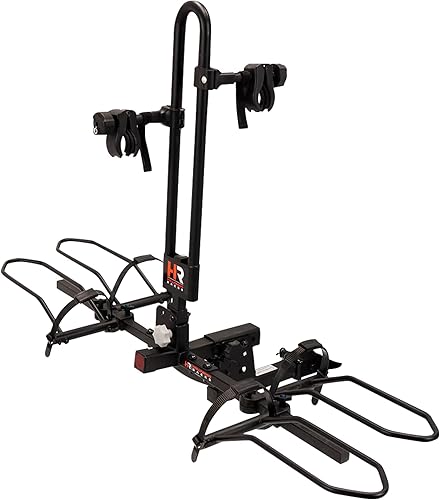
- TBB Score9.2
TrekBikesBlog (TBB) score is a ranking system that rates products on a scale of 1 to 10. The TrekBikesBlog score has no relationship or impact from any manufacturers or sales agent websites – it's an unbiased way to rate our products. Learn more
- BrandN/A

- TBB Score8.6
TrekBikesBlog (TBB) score is a ranking system that rates products on a scale of 1 to 10. The TrekBikesBlog score has no relationship or impact from any manufacturers or sales agent websites – it's an unbiased way to rate our products. Learn more
- BrandYoung Electric

Young 200 lbs 2-Bike Rack Hitch Mount for Car SUV,
- TBB Score8.4
TrekBikesBlog (TBB) score is a ranking system that rates products on a scale of 1 to 10. The TrekBikesBlog score has no relationship or impact from any manufacturers or sales agent websites – it's an unbiased way to rate our products. Learn more
- BrandYoung Electric

Young Electric 2 Ebike Rack Hitch Mount Bike Rack for
- TBB Score8.6
TrekBikesBlog (TBB) score is a ranking system that rates products on a scale of 1 to 10. The TrekBikesBlog score has no relationship or impact from any manufacturers or sales agent websites – it's an unbiased way to rate our products. Learn more
- BrandYoung Electric

- TBB Score8.8
TrekBikesBlog (TBB) score is a ranking system that rates products on a scale of 1 to 10. The TrekBikesBlog score has no relationship or impact from any manufacturers or sales agent websites – it's an unbiased way to rate our products. Learn more
- BrandWEIZE

- TBB Score8.6
TrekBikesBlog (TBB) score is a ranking system that rates products on a scale of 1 to 10. The TrekBikesBlog score has no relationship or impact from any manufacturers or sales agent websites – it's an unbiased way to rate our products. Learn more
- BrandWildroad

- TBB Score8.8
TrekBikesBlog (TBB) score is a ranking system that rates products on a scale of 1 to 10. The TrekBikesBlog score has no relationship or impact from any manufacturers or sales agent websites – it's an unbiased way to rate our products. Learn more
- BrandBlack Widow
Last update on 2026-11-27 / Affiliate links / Images, Product Titles, and Product Highlights from Amazon Product Advertising API
Snow and Sand Riders on Rigid Fat Bikes
If your riding runs on snowmobile trails, beaches and winter singletrack, your bike is the classic fat machine: rigid or hardtail, tires at 4 inches and beyond, weight usually 30 to 40 pounds. You need trays shaped for those tires and straps long enough to close over them with gloves on. Winter adds one more demand, since road salt attacks racks on every trip home. A rack that rinses clean and has replaceable straps will outlast the season far better than a bargain frame with fixed fittings.
Electric Fat Bike Owners Moving Real Weight
Electric fat bikes stack every challenge in this category: the widest tires, the longest wheelbases and weights that reach 60 to 80 pounds. Many racks that claim fat tire fit quietly cap each tray near 50 pounds, which excludes these bikes entirely. Start from the weight rating and work backward to tire fit, and consult our best bike rack for ebikes breakdown if your bike sits at the heavy end. For this group, the rack choice is narrow, and getting it right the first time matters.
Households Mixing One Fat Bike With Regular Bikes
One fat bike in a family fleet should not force a whole new transport system. Adjustable trays that narrow for a road bike and widen for the fat bike, or a two position rack with one oversized tray, solve the mix. The trick is adjustability that stays put under load: sliding cradles and straps that hold their setting over rough roads. If your other bikes travel on different vehicles too, our general best bike rack guide helps map which rack should live on which car.
Tray and Cradle Width for Wide Tires
This is the headline specification. Standard trays swallow tires up to about 3 inches; fat bike trays are shaped for 4 to 5 inch rubber, with a channel or cradle wide enough that the tire sits supported rather than perched on its knobs. A tire perched on top wanders sideways under braking and cornering, which loads the strap and the securing arm unevenly. Check the maximum tire width in the spec sheet against your widest tire, measured across the knobs, not the number printed on the sidewall. Sidewall labels flatter; calipers do not.
Wheel Straps Long Enough to Close
A wide tire eats strap length. Straps sized for road tires often reach around a fat tire with only one tooth of the ratchet engaged, which is a strap waiting to pop open on a pothole. Look for straps listed as fat bike length, or a design where the strap passes through a slot sized for wide rubber. The rear wheel strap does most of the stabilizing on tray racks, so treat its engagement as a safety item: you should get several clicks of the ratchet with the tire fully seated, using gloved hands in winter.
Weight Rating for Heavy Fat Bikes
Fat bikes are heavy even before electricity joins in. A steel fat bike can reach 40 pounds, alloy models sit in the low to mid 30s, and electric versions double the lighter figure. Match the per tray rating to your heaviest bike with margin, and remember the inboard tray usually carries the higher rating. Total vehicle tongue weight still applies on top of the rack rating, which is why trucks and larger SUVs dominate this category; the vehicle fit notes in our best bike rack for suv guide cover the hitch classes involved.
Wheelbase Length Support
Fat bikes run long. Relaxed geometry, big wheels and cargo oriented frames push wheelbases past what compact trays support, and a wheel hanging beyond the tray end has nothing holding it down. Compare your axle to axle measurement with the maximum wheelbase in the spec sheet, and leave a small margin rather than riding the exact limit. Long bikes also swing a bigger arc behind the car, so check tray fold and tilt clearance against your hatch with the longest bike loaded before the first trip.
Fender Friendly Contact Points
Many fat bikes wear full fenders, and the common hook style securing arm presses down on the front wheel exactly where a fender lives. Pressing a hook onto a fender bends it and can crack plastic stays. Prefer racks whose arm hooks the tire ahead of the fender, or designs that secure by the wheels with straps and cradles instead of a top hook. If your rack uses a hook, position it low against the tire near the fork, and check fender clearance on the first load, not after a highway hour of pressure.
Three measurements settle most purchases. First, tire width: wrap a tape around the widest point or use calipers across the outer knobs, because casing labels understate real width once the tire is inflated. Second, wheelbase: measure center of front axle to center of rear axle with the bike upright. Third, weight: a bathroom scale under each wheel, added together, gives a close total with the battery and accessories fitted.
Write those numbers on the rack box before you assemble anything, and keep the receipt until a loaded test drive is done. Riders who skip the measuring step often learn that the best bike rack for fat tire bikes on paper is the wrong one in their own driveway. If your measurements land outside every tray rack you find, the fallback is a roof tray rated for fat tires on strong crossbars, though lifting 40 pounds overhead is nobody's favorite chore; the best roof bike rack guide lists what those trays demand. Most riders, though, find a tray rack fits once the real numbers replace guesses.
- Trusting the sidewall width instead of measuring across the knobs, then finding the tire rides on top of the tray instead of in it.
- Closing the strap on its last click and calling it secure, when a single pothole can pop a barely engaged ratchet open.
- Resting the securing hook on a fender, which bends the fender and loosens as the plastic flexes over the drive.
- Loading two electric fat bikes on a rack whose per tray rating covers only one of them, because the total looked fine.
- Leaving the battery mounted for a long winter drive in road salt, adding weight and exposing contacts that makers suggest removing for transport.
Fat bike racks live in the harshest spray on the road, hauling bikes home from salted snow and beach sand. Rinse the whole rack with fresh water after those trips, working grit out of tray channels and strap ratchets, then dry it before storage so salt does not sit in the joints. Check strap webbing each season for cuts from tray edges, because wide tires work straps harder than skinny ones and a frayed strap is a failed strap waiting for a bump.
Lubricate the tilt pivot and any sliding cradle tracks lightly, and confirm sliding parts still move after winter, since dried salt can freeze an adjustment you need at the trailhead. Store the rack indoors where possible, and keep spare straps with it. A few minutes of washing after the messy trips keeps the finish, the ratchets and the pivots working for many winters.
What should I look for in a bike rack for fat tire bikes?
Start with the three measurements of your own bike and match them in order: tray width for your tire, wheelbase support for your frame length, and per tray weight rating for your build. Then confirm the straps close with several clicks to spare. One detail buyers miss: check the securing arm path if you run fenders. Those four checks, done in that order, eliminate most wrong purchases in this category.
Do fat tire bikes fit on a normal bike rack?
Generally no. A normal tray accepts tires up to about 3 inches wide, and a 4 inch fat tire perched above the channel is unstable no matter how tight the strap feels in the driveway. Hanging racks fail differently: the wide tire and long front end swing the bike into its neighbor. A handful of standard racks offer fat bike strap kits that genuinely work, but the tray width itself must still suit the tire. Treat fat fit as a design feature, not an accessory promise.
Can a rack carry two electric fat tire bikes?
Only racks with high per tray ratings, and there are not many. Two electric fat bikes can total 140 pounds or more, so you need each tray rated for your bike's full weight, plus a hitch and vehicle tongue rating that covers bikes and rack together. Removing both batteries before the drive trims several pounds per bike and protects the contacts, which helps the math honestly. If the ratings do not clear with margin, carry one fat e bike on the rack and move the second bike to another vehicle.
How do you clean a bike rack after beach or snow use?
Rinse with a plain garden hose the same day, flushing tray channels, strap ratchets and the hitch shank, then shake off water and let the rack dry fully before folding or storing it. Trays stored wet and closed hold salty moisture against the finish for weeks, which is how corrosion starts on racks that looked fine in spring. A drop of lubricant on pivots after drying finishes the job.
How long does a bike rack last in winter service?
The structure of a good rack lasts a decade, but winter service shortens the life of everything attached to it. Expect straps and pads to need replacement every two to three seasons under regular salt exposure, and inspect welds each spring for bubbling paint, the first sign of rust beneath. Racks rinsed after salty trips and stored dry indoors routinely outlast neglected ones by years, even when the neglected rack cost more new.
Fat tire transport is a measuring exercise disguised as shopping. Get your real tire width, wheelbase and weight, then demand a tray, straps and ratings that clear all three with margin, and mind the fender if you run one. The product table above lines the current designs up so you can check your numbers against them quickly. Do that, and the best bike rack for fat tire bikes for your garage stops being a gamble and becomes the obvious line in the spec sheet.


Best Action Camera Under 50 Dollars (2026): Honest Expectations for Cheap Cameras

Best Bike Tires for Commuting in 2026: Buying Guide and What to Check

Best Bike Tires in 2026: Buying Guide and What to Check

Best Cycling Glasses for Night Riding (2026): Buying Guide

Best Bike Phone Mounts for Navigation and Safety

Best Action Camera for Snowboarding (2026): Cold, Mounts and Stabilization

Best Bike Seat for Men in 2026: Buying Guide and What to Check

Best Bike Pedals for Gravel in 2026: Buying Guide and What to Check










