
Best Action Camera for Snowboarding (2026): Cold, Mounts and Stabilization
Filming a powder day sounds simple until the cold drains your battery by the second run and flat afternoon light washes out every turn. The best action camera for snowboarding is the one that keeps recording in freezing wind, seals out snow without a bulky case, and stays steady on a helmet or chest mount while you ride.
This guide explains how to choose rather than handing you a list of models. You will learn which specs matter on snow, which mounts survive a fall, and what each budget level realistically buys, with the comparison table below laying the main options side by side. If you film several sports across the year, our wider guide to the best action camera is a good starting point before you narrow down to snow use.
Compare Products

- TBB Score9.2
TrekBikesBlog (TBB) score is a ranking system that rates products on a scale of 1 to 10. The TrekBikesBlog score has no relationship or impact from any manufacturers or sales agent websites – it's an unbiased way to rate our products. Learn more
- BrandGoPro

- TBB Score8.8
TrekBikesBlog (TBB) score is a ranking system that rates products on a scale of 1 to 10. The TrekBikesBlog score has no relationship or impact from any manufacturers or sales agent websites – it's an unbiased way to rate our products. Learn more
- BrandGoPro
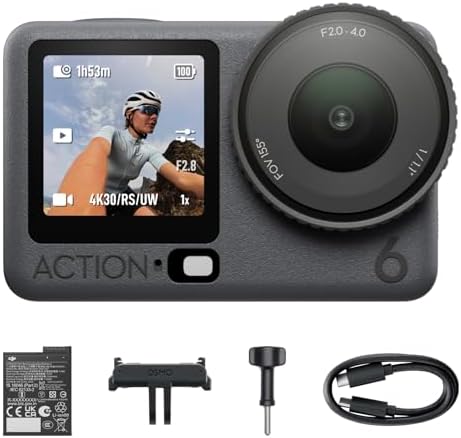
DJI Osmo Action 6 Standard Combo, 8K Waterproof Action Camera
- TBB Score9.0
TrekBikesBlog (TBB) score is a ranking system that rates products on a scale of 1 to 10. The TrekBikesBlog score has no relationship or impact from any manufacturers or sales agent websites – it's an unbiased way to rate our products. Learn more
- BrandDJI
- TBB Score9.4
TrekBikesBlog (TBB) score is a ranking system that rates products on a scale of 1 to 10. The TrekBikesBlog score has no relationship or impact from any manufacturers or sales agent websites – it's an unbiased way to rate our products. Learn more
- BrandDJI

- TBB Score9.2
TrekBikesBlog (TBB) score is a ranking system that rates products on a scale of 1 to 10. The TrekBikesBlog score has no relationship or impact from any manufacturers or sales agent websites – it's an unbiased way to rate our products. Learn more
- BrandInsta360

- TBB Score8.6
TrekBikesBlog (TBB) score is a ranking system that rates products on a scale of 1 to 10. The TrekBikesBlog score has no relationship or impact from any manufacturers or sales agent websites – it's an unbiased way to rate our products. Learn more
- BrandInsta360

- TBB Score9.0
TrekBikesBlog (TBB) score is a ranking system that rates products on a scale of 1 to 10. The TrekBikesBlog score has no relationship or impact from any manufacturers or sales agent websites – it's an unbiased way to rate our products. Learn more
- BrandAKASO

- TBB Score8.8
TrekBikesBlog (TBB) score is a ranking system that rates products on a scale of 1 to 10. The TrekBikesBlog score has no relationship or impact from any manufacturers or sales agent websites – it's an unbiased way to rate our products. Learn more
- BrandAKASO

DJI Osmo Action 5 Pro Waterproof Action Camera Bundle, 1/1.3"
- TBB Score9.0
TrekBikesBlog (TBB) score is a ranking system that rates products on a scale of 1 to 10. The TrekBikesBlog score has no relationship or impact from any manufacturers or sales agent websites – it's an unbiased way to rate our products. Learn more
- BrandDJI

- TBB Score8.0
TrekBikesBlog (TBB) score is a ranking system that rates products on a scale of 1 to 10. The TrekBikesBlog score has no relationship or impact from any manufacturers or sales agent websites – it's an unbiased way to rate our products. Learn more
- BrandApexcam
Last update on 2026-11-25 / Affiliate links / Images, Product Titles, and Product Highlights from Amazon Product Advertising API
Resort Riders Who Film Friends Between Lift Rides
If most of your filming happens on groomed runs with a friend following behind, a standard wide lens camera with strong stabilization covers nearly everything. You do not need the highest frame rates, but you do need a battery that survives a cold morning and a mount that stays put on a helmet. Simple controls matter more than deep menus, because you will start and stop recording with gloves on at the top of every lift.
Park and Backcountry Riders Who Want Slow Motion
Riders filming jumps, rails, and steep lines need high frame rates for smooth slow motion and stabilization that can handle rough landings. A second mount angle, chest or pole, adds variety that a single helmet view cannot. Backcountry riders should also plan battery swaps for long approaches. Remember that a camera never replaces avalanche safety gear, route planning, and telling someone where you are going.
Riders Who Film in Every Season
Many snowboarders ride bikes and motorcycles once the snow melts, and one camera often has to cover all of it. If that sounds like you, weather sealing and a shared mount system matter more than a snow specific feature you will use ten days a year. Our guide to the best action camera for motorcycle shows how the same sealing and mount questions play out at road speed in summer rain.
Waterproofing Without a Housing
Most current action cameras are sealed to about 33 feet (10 m) with no case at all, which is more than enough for snow, slush, and rain. A bare camera keeps audio clearer and avoids the fogging that plagues housings when warm air meets cold plastic. Check that the battery door and port covers latch firmly, because a door left slightly open is the most common cause of water damage. A housing still helps for deep water, but for snowboarding it mostly adds bulk.
battery life in Freezing Temperatures
Lithium batteries lose capacity as the temperature drops, and a camera rated for two hours at room temperature may give you half that on a windy summit. Swappable batteries are the practical answer, since you can keep a spare warm in an inside pocket and trade it in seconds. Fixed battery models are lighter but leave you with no backup. Also look at how fast the camera starts recording from off, because a slow boot wastes both battery and moments.
Stabilization for Chatter and Landings
Electronic stabilization smooths the vibration of icy traverses and the shock of landings, and horizon leveling keeps the frame straight when you lean into a carve. Stabilization crops the image slightly, so very wide lenses lose a little of their view. It cannot rescue a loose mount, though. A camera that rattles in its bracket will produce wobbles no software can fully remove, so mount tightness comes first.
Resolution, Frame Rates, and Slow Motion
For general riding footage, 4K at 60 frames per second gives crisp results with reasonable file sizes. Frame rates of 120 or higher matter when you want smooth slow motion of a trick or a spray of powder. Higher settings drain batteries faster and fill memory cards sooner, which matters on a long day far from a charger. Riders who post short clips for friends can drop to 1080p and gain a lot of runtime.
Mounts for Helmets, Goggles, and Chest Rigs
A helmet mount gives a true point of view but sits high, which can make speed look slower than it felt. A chest mount frames your arms and board and feels more immersive, while a goggle strap mount sits close to eye level. Whichever you choose, add a short tether so a hard fall does not leave the camera buried in the snow. Always check the helmet maker guidance before sticking adhesive mounts to a helmet shell.
Controls You Can Use With Gloves On
Touchscreens are awkward with thick gloves and nearly useless with wet hands, so judge a camera by its physical buttons. A large record button you can find by feel, voice commands for hands free starts, and a quick capture mode that powers on and records with one press all earn their keep at the top of a cold lift. Bright status lights also help, since you cannot always hear a beep over wind.
A 360 camera records in every direction at once, so you can film a friend riding beside you and choose the framing later in the app. That freedom suits group days and park sessions where the action rarely stays in front of the lens. The trade offs are larger files, longer editing time, and lower sharpness in any single direction than a standard camera of the same price. Our guide to the best 360 action camera explains how reframing works and what it demands from your phone and storage. A standard lens stays simpler and sharper for riders who mostly film the line ahead.
Entry level cameras under $200 record decent 4K video but usually give up strong stabilization, bare waterproofing, or swappable batteries, and one of those gaps will annoy you on snow. The middle tier, about $250 to $400, is where the snowboarding checklist comes together: solid stabilization, sealing without a case, and batteries you can swap with gloves on. Flagship models above that range add larger sensors for better low light and higher resolutions, which help most at dawn and dusk. Before buying, compare the entry tier against the best budget action camera features that matter in winter, namely sealing, stabilization, and spare battery support, instead of chasing resolution numbers alone.
- Buying for resolution alone, then losing half your day to a battery that fades in the cold.
- Mounting the camera loosely and blaming stabilization for the shaky footage that follows.
- Leaving the lens unprotected, so board edges and ice crystals scratch the glass on day one.
- Recording every run at maximum settings and filling the memory card before lunch.
- Relying on the touchscreen with thick gloves and missing the start of a run.
After a day on snow, let the camera dry fully before opening any door or port cover, because trapped meltwater creeps into seals. Wipe the lens with a clean microfiber cloth only, since gritty gloves grind scratches into the coating. Store batteries at a partial charge rather than full or empty, and warm a cold battery in an inside pocket before use so it delivers its real capacity. Fit adhesive mounts indoors at room temperature, because the pads cure poorly in freezing air. Finally, update the firmware before a trip, not on the morning of it, so any surprise change in menus happens at home.
What is the best action camera for snowboarding?
The right choice is the camera that matches your mount style and still records at the end of a cold day, not the one with the longest spec sheet. Prioritize sealing, swappable batteries, and stabilization, then pick resolution. One factor riders overlook is helmet weight: a heavy camera on a helmet tires your neck over a full day, so lighter models often win for resort use.
Do action cameras keep working in freezing weather?
Yes, within limits. The camera itself tolerates cold well, but battery capacity falls sharply below freezing and runtime can drop by a third or more. Keep the camera in an inside pocket between runs rather than on an exposed mount. That habit saves the battery and also prevents the condensation that forms when cold gear meets warm lodge air.
Should I pick a 360 camera or a standard action camera for snowboarding?
Choose 360 if you ride in a group and want to reframe shots toward friends after the fact. Choose standard if you want sharper footage and faster editing. Budget extra time either way: reframing several 360 clips in the app takes noticeably longer than trimming standard clips, which matters when you edit on a phone in the evening.
Can an action camera for snowboarding get wet without a case?
Most current models can, since they are sealed for shallow water and shrug off snow and rain easily. The weak point is rarely the rating but the battery door, so press every latch until it clicks before you ride. If a door feels loose or the seal looks gritty, rinse the seal area with clean water and let it dry before your next day out.
How do I keep the action camera lens from fogging on the mountain?
Fogging comes from warm moist air trapped against cold glass. Let the camera acclimate in a cold outer pocket before the first run instead of pulling it straight from a warm jacket. If you use a housing, anti fog inserts absorb the moisture that causes the haze. Cracking the case open on the lift to wipe the lens usually makes the problem worse, not better.
On snow, the spec sheet matters less than sealing, battery swaps, and a mount that stays silent and tight. Decide how you will carry the camera, helmet, chest, or pole, and let that choice rank the features above. The product table above pulls the leading options together so you can compare the factors side by side. Pick the best action camera for snowboarding for the way you actually ride, and it will still be earning its place in your pack seasons from now.


Best Cycling Glasses for Night Riding (2026): Buying Guide

Best Bike Phone Mounts for Navigation and Safety

Best Bike Seat for Men in 2026: Buying Guide and What to Check

Best Bike Pedals for Gravel in 2026: Buying Guide and What to Check

Best 8K Action Cameras (2026): What 8K Really Gets You on the Bike

Best Bike Lock for City in 2026: Buying Guide and What to Check

Best Bike Lock with Alarm in 2026: Buying Guide and What to Check

Best Bike Rack for Jeep in 2026: Buying Guide and What to Check










