Best Bike Pumps: Floor, Mini, and CO2 Explained
A flat tire is inevitable eventually, and the pump you own at that moment decides whether it's a two-minute fix or a long walk home. The best bike pumps aren't one single product, since a pump built for topping off tires in your garage works completely differently from one meant to live in a saddle bag for roadside repairs. Most serious riders end up owning more than one type, so understanding what each style actually does well makes the buying decision much easier.
Compare Products
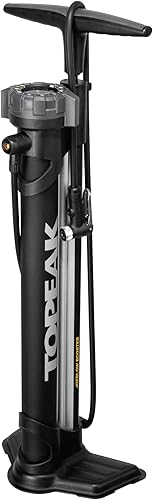
Topeak JoeBlow Booster Bike Pump
- TBB Score8.6
TrekBikesBlog (TBB) score is a ranking system that rates products on a scale of 1 to 10. The TrekBikesBlog score has no relationship or impact from any manufacturers or sales agent websites – it's an unbiased way to rate our products. Learn more
- BrandN/A
- TBB Score8.0
TrekBikesBlog (TBB) score is a ranking system that rates products on a scale of 1 to 10. The TrekBikesBlog score has no relationship or impact from any manufacturers or sales agent websites – it's an unbiased way to rate our products. Learn more
- BrandN/A

- TBB Score9.0
TrekBikesBlog (TBB) score is a ranking system that rates products on a scale of 1 to 10. The TrekBikesBlog score has no relationship or impact from any manufacturers or sales agent websites – it's an unbiased way to rate our products. Learn more
- BrandN/A

VIAIR Recon Mini Portable Electric Bike Pump, 120 PSI Digital
- TBB Score8.6
TrekBikesBlog (TBB) score is a ranking system that rates products on a scale of 1 to 10. The TrekBikesBlog score has no relationship or impact from any manufacturers or sales agent websites – it's an unbiased way to rate our products. Learn more
- BrandVIAIR

CYCPLUS Tiny Electric Bike Pump AS2Ultra, 90g, Magnesium Alloy Shell,
- TBB Score8.6
TrekBikesBlog (TBB) score is a ranking system that rates products on a scale of 1 to 10. The TrekBikesBlog score has no relationship or impact from any manufacturers or sales agent websites – it's an unbiased way to rate our products. Learn more
- BrandCYCPLUS

LEZYNE Micro Floor Drive High Pressure & High Volume Bike
- TBB Score8.0
TrekBikesBlog (TBB) score is a ranking system that rates products on a scale of 1 to 10. The TrekBikesBlog score has no relationship or impact from any manufacturers or sales agent websites – it's an unbiased way to rate our products. Learn more
- BrandN/A

Topeak JoeBlow Sprint Bike Pump – TwinHead High-Pressure Floor Pump
- TBB Score8.8
TrekBikesBlog (TBB) score is a ranking system that rates products on a scale of 1 to 10. The TrekBikesBlog score has no relationship or impact from any manufacturers or sales agent websites – it's an unbiased way to rate our products. Learn more
- BrandN/A

- TBB Score9.0
TrekBikesBlog (TBB) score is a ranking system that rates products on a scale of 1 to 10. The TrekBikesBlog score has no relationship or impact from any manufacturers or sales agent websites – it's an unbiased way to rate our products. Learn more
- BrandN/A

ROCKBROS Inflator Electric Mini Bike Pump PRO Screen Pressure Auto
- TBB Score9.0
TrekBikesBlog (TBB) score is a ranking system that rates products on a scale of 1 to 10. The TrekBikesBlog score has no relationship or impact from any manufacturers or sales agent websites – it's an unbiased way to rate our products. Learn more
- BrandROCKBROS

- TBB Score8.0
TrekBikesBlog (TBB) score is a ranking system that rates products on a scale of 1 to 10. The TrekBikesBlog score has no relationship or impact from any manufacturers or sales agent websites – it's an unbiased way to rate our products. Learn more
- BrandN/A

Topeak JoeBlow Sport III High-Pressure Bike Floor Pump – 160
- TBB Score9.4
TrekBikesBlog (TBB) score is a ranking system that rates products on a scale of 1 to 10. The TrekBikesBlog score has no relationship or impact from any manufacturers or sales agent websites – it's an unbiased way to rate our products. Learn more
- BrandTopeak

- TBB Score9.6
TrekBikesBlog (TBB) score is a ranking system that rates products on a scale of 1 to 10. The TrekBikesBlog score has no relationship or impact from any manufacturers or sales agent websites – it's an unbiased way to rate our products. Learn more
- BrandHafuloky

- TBB Score9.6
TrekBikesBlog (TBB) score is a ranking system that rates products on a scale of 1 to 10. The TrekBikesBlog score has no relationship or impact from any manufacturers or sales agent websites – it's an unbiased way to rate our products. Learn more
- BrandN/A

CYCPLUS Electric Bike Pump, A3Mini, 120 PSI, Brushless Motor, with
- TBB Score8.8
TrekBikesBlog (TBB) score is a ranking system that rates products on a scale of 1 to 10. The TrekBikesBlog score has no relationship or impact from any manufacturers or sales agent websites – it's an unbiased way to rate our products. Learn more
- BrandN/A
Last update on 2026-10-17 / Affiliate links / Images, Product Titles, and Product Highlights from Amazon Product Advertising API
These three stand out in the product table above for different budgets and needs.
Best overall: the SILCA Terra Bike Floor Pump with Steel Construction, around $139, is our first choice from the table.

Best value: the LEZYNE Micro Floor Drive Digital HVG High Volume Bike, around $90, is the lowest priced of these three.

Best premium pick: the VIAIR Recon Mini Portable Electric Bike Pump, around $147, costs more but steps up in features.
A floor pump, sometimes called a track pump, uses a large barrel and a stable base so you can push a full tire from flat to riding pressure in under a minute at home. The larger barrel moves far more air per stroke than a handheld unit, which is exactly why it's the faster, less tiring option for routine maintenance.
A mini pump trades speed for portability, fitting in a jersey pocket or saddle bag for roadside emergencies. It takes noticeably more strokes to reach riding pressure, but that tradeoff is the point. Most riders keep a floor pump at home for regular top-ups and carry a mini pump for whatever happens mid-ride.
Before buying any pump, check which valve type your bike actually uses, since this single detail determines whether a pump works at all. Presta valves are narrower and common on road and higher-end bikes, while Schrader valves, the same style found on car tires, show up on many entry-level and kids' bikes.
Many pumps handle both with a switchable or dual-sided head, which is worth paying slightly more for if multiple bikes with different valve types live in your household. A pump that only fits one valve type is fine if you're certain every bike you'll ever service uses the same valve, but that certainty is rare.
Road bike tires typically run 80 to 120 PSI, while mountain bike tires sit much lower, often 20 to 40 PSI, and gravel bikes fall somewhere in between. Make sure any pump you buy comfortably covers your bike's actual pressure range with room to spare, rather than maxing out right at the number you need.
A reliable, easy-to-read gauge matters more than most riders expect, since consistently over- or under-inflated tires affect both ride comfort and rolling resistance. Analog gauges are common and generally accurate, but a few higher-end pumps now offer digital gauges for more precise readings, which is worth considering for narrower, higher-pressure road tires where a few PSI makes a noticeable difference.
A CO2 inflator uses a small disposable cartridge to inflate a tire almost instantly, making it a popular backup for racers and anyone who wants the lightest possible flat-repair kit. The tradeoff is that each cartridge is single-use, so you need to carry spares and it's easy to run out mid-ride if you hit more than one flat.
Most riders who carry CO2 still pack a small mini pump as a true backup, since a pump never runs out the way a cartridge does. Treat CO2 as a fast, lightweight option for competitive riding rather than a full replacement for a traditional pump.
If you're bikepacking or riding long distances away from support, the weight and mounting method of your portable pump matters more than it does for a short commute. A frame-mounted pump stays with the bike without taking up bag space, while a longer mini pump generally reaches pressure faster than an ultra-compact one, even though it's slightly heavier and bulkier to carry.
Some mini pumps include a small hose that connects to the valve rather than pushing directly against it, which reduces strain on the valve stem during inflation and is worth the small extra bulk if you value protecting your tubes over the long run.
Do I need both a floor pump and a mini pump?
Most regular riders benefit from owning both, a floor pump for fast, accurate top-ups at home and a mini pump or CO2 inflator for roadside repairs. If you only ride occasionally and rarely leave home without a car nearby, a floor pump alone may be enough.
What's the difference between Presta and Schrader valves?
Presta valves are narrower with a locking nut and are common on road and performance bikes, while Schrader valves are wider and match the valve style used on car tires. Check your bike's valve type before buying a pump, or choose one with a dual-compatible head.
What PSI should I inflate my tires to?
This depends on your bike and tire width, but road tires generally run 80 to 120 PSI, mountain bike tires run 20 to 40 PSI, and gravel bikes fall in between. Your tire's sidewall usually lists a recommended range.
Are CO2 inflators worth carrying?
They're a fast, lightweight backup option, especially for racing or minimizing saddle bag weight, but each cartridge is single-use. Many riders carry both CO2 and a compact mini pump for redundancy.
How often should I check and top off my tire pressure?
Tires lose air gradually even without a puncture, so checking before every ride is a good habit, especially for narrower, higher-pressure road tires that lose noticeable pressure over just a few days.
Do digital pump gauges matter?
They offer more precise readings than analog gauges, which can matter for road cyclists chasing exact PSI targets, but a quality analog gauge is accurate enough for most riders and considerably cheaper.
Casual and commuting riders are usually well served by a solid floor pump at home and a basic mini pump for emergencies, while racers and long-distance riders often add CO2 for speed when every second counts. Buying based on where and how often you'll actually use each type, rather than the most feature-packed option available, is what keeps you from getting stuck with a pump that doesn't fit your rides.


Best Bike Bells for Being Heard on Busy Streets

Best Bike Locks: What Actually Stops Theft

Best Mountain Bike Handlebars for Your Riding Style

Best Bike Lights: Lumens, Beam Pattern, and Runtime

Best Bike Trailers: Hitch Fit, Weight, and Safety

Best Bike Trainers: Direct Drive vs Wheel-On Explained
Best Electric Bike Pumps: Matching the Right Model to Your Routine

Best Cycling Jerseys: Fabric, Fit, and Storage That Work While Riding