Best Bike Locks: What Actually Stops Theft
Most people buy a lock, wrap it around their bike, and assume the job is done. The uncomfortable truth is that the best bike locks only work if you also pick the right type for where you're parking and use it correctly, since a top-rated lock looped loosely around a flimsy railing offers barely more protection than no lock at all. Here's how security ratings actually work, which lock types hold up against real theft tools, and how to lock your bike so nothing important is left exposed.
Compare Products

- TBB Score9.2
TrekBikesBlog (TBB) score is a ranking system that rates products on a scale of 1 to 10. The TrekBikesBlog score has no relationship or impact from any manufacturers or sales agent websites – it's an unbiased way to rate our products. Learn more
- BrandN/A

- TBB Score9.2
TrekBikesBlog (TBB) score is a ranking system that rates products on a scale of 1 to 10. The TrekBikesBlog score has no relationship or impact from any manufacturers or sales agent websites – it's an unbiased way to rate our products. Learn more
- BrandN/A

- TBB Score9.2
TrekBikesBlog (TBB) score is a ranking system that rates products on a scale of 1 to 10. The TrekBikesBlog score has no relationship or impact from any manufacturers or sales agent websites – it's an unbiased way to rate our products. Learn more
- BrandN/A

- TBB Score9.0
TrekBikesBlog (TBB) score is a ranking system that rates products on a scale of 1 to 10. The TrekBikesBlog score has no relationship or impact from any manufacturers or sales agent websites – it's an unbiased way to rate our products. Learn more
- BrandN/A

- TBB Score8.4
TrekBikesBlog (TBB) score is a ranking system that rates products on a scale of 1 to 10. The TrekBikesBlog score has no relationship or impact from any manufacturers or sales agent websites – it's an unbiased way to rate our products. Learn more
- BrandN/A

- TBB Score9.2
TrekBikesBlog (TBB) score is a ranking system that rates products on a scale of 1 to 10. The TrekBikesBlog score has no relationship or impact from any manufacturers or sales agent websites – it's an unbiased way to rate our products. Learn more
- BrandKryptonite

- TBB Score9.2
TrekBikesBlog (TBB) score is a ranking system that rates products on a scale of 1 to 10. The TrekBikesBlog score has no relationship or impact from any manufacturers or sales agent websites – it's an unbiased way to rate our products. Learn more
- BrandN/A

- TBB Score9.2
TrekBikesBlog (TBB) score is a ranking system that rates products on a scale of 1 to 10. The TrekBikesBlog score has no relationship or impact from any manufacturers or sales agent websites – it's an unbiased way to rate our products. Learn more
- BrandN/A

- TBB Score9.4
TrekBikesBlog (TBB) score is a ranking system that rates products on a scale of 1 to 10. The TrekBikesBlog score has no relationship or impact from any manufacturers or sales agent websites – it's an unbiased way to rate our products. Learn more
- BrandN/A

- TBB Score8.4
TrekBikesBlog (TBB) score is a ranking system that rates products on a scale of 1 to 10. The TrekBikesBlog score has no relationship or impact from any manufacturers or sales agent websites – it's an unbiased way to rate our products. Learn more
- BrandN/A

- TBB Score9.0
TrekBikesBlog (TBB) score is a ranking system that rates products on a scale of 1 to 10. The TrekBikesBlog score has no relationship or impact from any manufacturers or sales agent websites – it's an unbiased way to rate our products. Learn more
- BrandN/A

- TBB Score8.8
TrekBikesBlog (TBB) score is a ranking system that rates products on a scale of 1 to 10. The TrekBikesBlog score has no relationship or impact from any manufacturers or sales agent websites – it's an unbiased way to rate our products. Learn more
- BrandN/A
- TBB Score8.2
TrekBikesBlog (TBB) score is a ranking system that rates products on a scale of 1 to 10. The TrekBikesBlog score has no relationship or impact from any manufacturers or sales agent websites – it's an unbiased way to rate our products. Learn more
- BrandN/A

- TBB Score9.2
TrekBikesBlog (TBB) score is a ranking system that rates products on a scale of 1 to 10. The TrekBikesBlog score has no relationship or impact from any manufacturers or sales agent websites – it's an unbiased way to rate our products. Learn more
- BrandSportneer
Last update on 2026-10-16 / Affiliate links / Images, Product Titles, and Product Highlights from Amazon Product Advertising API
These three stand out in the product table above for different budgets and needs.
Best overall: the Kryptonite New York Fahgettaboutit Mini Bike U-Lock, around $169, is our first choice from the table.

Best value: the Kryptonite New York Standard Heavy Duty U-Lock, around $117, is the lowest priced of these three.
Best premium pick: the Kryptonite New York 1210 Bike Chain Lock, around $175, costs more but steps up in features.

Independent testers like Sold Secure rate locks bronze, silver, or gold based on how long they resist standardized attack tools, with a newer Diamond tier reserved for locks tough enough to protect high-value ebikes. ABUS uses its own 1 to 15 numeric scale instead, where higher numbers mean more resistance to cutting, prying, and drilling. Neither rating guarantees a lock is unbreakable; both simply tell you how much time and effort a thief needs to defeat it, which is often enough to make them move on to an easier target nearby.
A simple rule that most security guides agree on: budget roughly 10 percent of your bike's value toward locking it up properly. A $2,000 bike secured with a $15 cable lock is a mismatch that thieves specifically look for.
Not all locks resist the same tools, and knowing the difference matters more than brand loyalty when you're comparing the best bike locks side by side.
U-Locks and D-Locks
A rigid U-lock (also called a D-lock) is the standard for good reason: its solid steel shackle resists bolt cutters far better than a chain or cable, and there's no flexible link for a thief to get leverage on. The main weakness is a "twist attack" using a long pipe as a lever, which is why thicker shackles and anti-pry designs matter more than overall size.
Chain Locks
Heavy chain locks, wrapped in a fabric sleeve to protect your frame's paint, offer flexibility that U-locks can't match since they wrap around irregular anchor points. Link thickness is what determines real security here; thin, lightweight chains marketed for "convenience" are cut through almost as quickly as a cable.
Folding Locks
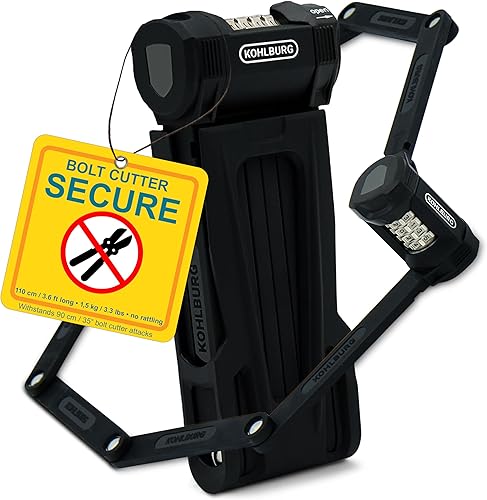
Folding locks use a series of metal bars connected by rivets, which fold flat for easy carrying. The rigid bars resist saws better than a chain, and the flat profile makes it hard to get bolt cutters positioned correctly, making these a solid middle ground between a compact cable lock and a bulky chain.
Cable Locks (and Why They're Rarely Enough Alone)
Cable locks are lightweight and cheap, but that thin, coiled wire is exactly what makes it fast to cut with basic bolt cutters or even heavy-duty wire cutters. They're best used as a secondary lock for a wheel or accessory, not as your only line of defense for the frame.
A high-security lock used carelessly still leaves your bike vulnerable. Always lock through the frame itself, not just a wheel, since quick-release wheels come off in seconds. Choose a genuinely solid anchor: a fixed bike rack or thick pole bolted into concrete, not a chain-link fence or a sign post that can be lifted over. Keep the lock positioned high and tight against the frame and anchor, leaving as little internal space as possible for a thief to fit a pry bar or jack. Security researchers consistently recommend using two different lock types together, such as a U-lock on the frame and a cable for a wheel, since it forces a thief to carry and use two different sets of tools.
Even among the best bike locks, the most secure option does no good if it's so heavy and awkward that you stop bringing it along. Commuters who lock up multiple times a day generally do better with a mid-weight U-lock or compact folding lock that fits in a bag or mounts to the frame. A bike parked in one high-risk location for long stretches, like an overnight street spot, justifies carrying a heavier chain or larger U-lock, since portability matters less than raw resistance in that scenario. Be honest about your actual routine rather than buying the heaviest option and letting it sit unused at home.
What is the most secure type of bike lock?
Among the best bike locks, a thick-shackle U-lock with a high Sold Secure or ABUS rating is generally considered the most secure single option, though pairing any solid primary lock with a second lock of a different type improves security further.
Is a U-lock better than a chain lock?
U-locks resist bolt cutters and leverage attacks slightly better in most independent tests, but a thick, well-rated chain lock offers comparable protection with more flexibility for awkward anchor points.
Should I use two bike locks?
Yes, security experts widely recommend it. Using two different lock types forces a thief to carry and successfully use two separate sets of tools, which significantly increases the time and risk involved in the theft.
Are cable locks worth buying?
On their own, cable locks offer weak protection against a determined thief with bolt cutters. They're genuinely useful as a lightweight secondary lock for wheels or accessories alongside a stronger primary lock.
How much should I spend on a bike lock?
A common guideline is roughly 10 percent of your bike's value, since an expensive bike secured with a cheap lock is a common and easily avoidable target for theft.
What's the correct way to lock a bike outside?
Lock through the frame and a wheel to a fixed, solid anchor point, keep the lock positioned tight with minimal internal gap, and avoid fences, sign posts, or anything that can be lifted or cut easily.


Best Mountain Bike Handlebars for Your Riding Style

Best Bike Lights: Lumens, Beam Pattern, and Runtime

Best Bike Trailers: Hitch Fit, Weight, and Safety

Best Bike Trainers: Direct Drive vs Wheel-On Explained

Best Electric Bike Pumps: Matching the Right Model to Your Routine

Best Cycling Jerseys: Fabric, Fit, and Storage That Work While Riding

Best Mountain Bike Tires for Every Trail Condition

Best Cycling Gloves: What Actually Matters Before You Buy