
Best Action Camera for Travel (2026): Small Cameras for Big Trips
Travel punishes bulky gear. The camera that joins every day of a trip is the one that fits a jacket pocket, charges from the same cable as your phone, and survives a beach day without a case. Picking the best action camera for travel is a balancing act between size, battery life, and footage that still looks good when the trip becomes a walking tour instead of a downhill run.
This guide compares camera types by travel realities: packing space, charging on the road, stabilization for walking footage, and the mounts worth their grams. The comparison table below sums up the main styles, and our wider guide to the best action camera covers the full market.
Compare Products

- TBB Score9.2
TrekBikesBlog (TBB) score is a ranking system that rates products on a scale of 1 to 10. The TrekBikesBlog score has no relationship or impact from any manufacturers or sales agent websites – it's an unbiased way to rate our products. Learn more
- BrandGoPro

DJI Osmo Action 5 Pro Essential Combo, Waterproof Action Camera
- TBB Score9.2
TrekBikesBlog (TBB) score is a ranking system that rates products on a scale of 1 to 10. The TrekBikesBlog score has no relationship or impact from any manufacturers or sales agent websites – it's an unbiased way to rate our products. Learn more
- BrandDJI

- TBB Score8.6
TrekBikesBlog (TBB) score is a ranking system that rates products on a scale of 1 to 10. The TrekBikesBlog score has no relationship or impact from any manufacturers or sales agent websites – it's an unbiased way to rate our products. Learn more
- BrandInsta360

- TBB Score8.8
TrekBikesBlog (TBB) score is a ranking system that rates products on a scale of 1 to 10. The TrekBikesBlog score has no relationship or impact from any manufacturers or sales agent websites – it's an unbiased way to rate our products. Learn more
- BrandAKASO

- TBB Score9.0
TrekBikesBlog (TBB) score is a ranking system that rates products on a scale of 1 to 10. The TrekBikesBlog score has no relationship or impact from any manufacturers or sales agent websites – it's an unbiased way to rate our products. Learn more
- BrandAKASO

Apexcam M80 Action Camera 4K 60FPS with 128GB Card, 64MP
- TBB Score8.0
TrekBikesBlog (TBB) score is a ranking system that rates products on a scale of 1 to 10. The TrekBikesBlog score has no relationship or impact from any manufacturers or sales agent websites – it's an unbiased way to rate our products. Learn more
- BrandApexcam

- TBB Score7.8
TrekBikesBlog (TBB) score is a ranking system that rates products on a scale of 1 to 10. The TrekBikesBlog score has no relationship or impact from any manufacturers or sales agent websites – it's an unbiased way to rate our products. Learn more
- BrandN/A

- TBB Score8.4
TrekBikesBlog (TBB) score is a ranking system that rates products on a scale of 1 to 10. The TrekBikesBlog score has no relationship or impact from any manufacturers or sales agent websites – it's an unbiased way to rate our products. Learn more
- BrandGoPro
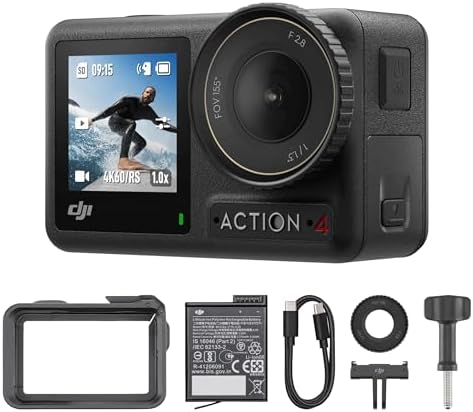
- TBB Score9.4
TrekBikesBlog (TBB) score is a ranking system that rates products on a scale of 1 to 10. The TrekBikesBlog score has no relationship or impact from any manufacturers or sales agent websites – it's an unbiased way to rate our products. Learn more
- BrandDJI
Last update on 2026-11-27 / Affiliate links / Images, Product Titles, and Product Highlights from Amazon Product Advertising API
Travelers carry cameras differently. Match the camera style to your kind of trip below.
One Bag Backpackers and Light Packers
Every gram in your bag is a decision, so you want the smallest camera that still shoots strong video, ideally one that disappears into a shorts pocket between uses. A compact camera with waterproofing built in saves the weight and bulk of a housing, and USB C charging means one cable and one power bank run your whole kit. Skip the big mount bag: a mini grip that works as a handle and a tiny tripod covers most travel shots.
Riders Touring by Bike or Motorcycle
Your trip is the ride itself, so the camera lives on a bar, a chest mount, or a helmet for hours at a time. Battery rotation matters more than pocket size for you: choose a camera with swappable batteries and carry two spares. Stabilization earns its keep on rough tarmac and gravel. Our guide to the best action camera for motorcycle goes deeper on mounts and vibration for the riding days of a mixed trip.
City Break and Family Travelers
You film markets, museums from outside, kids in the pool, and dinners that run long. A camera with a front facing screen helps you frame family shots without guesswork, and simple automatic modes matter because nobody will wait while you dig through menus. Waterproofing without a case suits hotel pools and beach afternoons. If the camera is a second device beside your phone, a lower price makes sense; our guide to the best budget action camera lists what the cheaper tier gives up.
Five factors decide whether a travel camera gets used every day or left in the hotel. Compare these first.
Size, Weight and Pocketability
Most action cameras weigh about 4 to 6 ounces, small on paper, but the real test is the shape of your day. A camera that rides in a pocket comes out ten times more often than one that needs a case opened and a mount fitted. Note the lens bulge and screen size, because square cameras with big screens carry awkwardly in slim pockets. Travel weight is really kit weight: camera, one grip, a spare battery, and a cable. Add up the whole kit before you buy, and be honest about which mounts you will actually pack, because most travelers use two mounts at most.
Battery Life and Charging on the Road
A travel day of filming in short clips can total two to three hours of footage, more than one battery holds. Prefer cameras that charge over USB C directly or through a small dock, so a power bank in your day bag tops everything up at lunch. Sealed cameras with fixed batteries are lighter but end your filming when they die. Swappable batteries weigh a little more and keep you shooting. Also check charge speed: a camera that refills in about an hour at a cafe beats one that needs half the night, especially when your room has one free outlet.
Stabilization for Walking Footage
Travel video is mostly walking, and walking is the hardest motion for a camera to smooth. Strong electronic stabilization turns a stroll through a market into watchable footage, but it crops the frame slightly and can struggle at night, when it sometimes leaves a floating wobble. Horizon locking is the feature that quietly improves travel clips most, keeping the frame level when the camera tilts in your hand. If you plan evening footage in old towns and night markets, know that no stabilization fixes dim light, and a larger sensor helps more after dark.
Screens, Selfie Use and Audio
A front screen changes travel filming because you can frame yourself against a view without a second take. Touchscreens that work with wet fingers help at beaches and pools. Audio is the quiet weak point of action cameras: wind noise ruins clips on viewpoints and boats, and cases muffle voices. Cameras that accept a small external microphone, or at least a foam wind cover, sound far better in vlogs and family clips. If you mostly film scenery and rides, audio matters less; if people talk to the camera, rank it near the top of your list.
Waterproofing and Toughness Without a Case
Most current action cameras are waterproof to about 10 meters with their doors closed, which covers rain, pools, snorkeling, and beach days with no housing at all. That convenience is the main reason travelers choose them over bigger cameras. Check that the battery door seals well and is easy to close correctly, because a door left slightly open is the usual way travel cameras flood. Toughness counts beyond water: a camera that survives drops onto stone streets and being tossed into a day bag will outlast a fragile compact camera on the same trip.
Build the kit around what a day actually needs: the camera, one short grip that doubles as a tripod, two batteries, one cable, and a small case that clips inside your bag so the camera is never buried. Leave mounts with a single purpose at home unless that purpose is the point of the trip. Back up footage each night to your phone or a small drive, because a lost camera with a full card loses the whole trip, while daily backups lose at most a day. Keep the memory card math simple: filming in 4K uses roughly 40 to 60 GB per hour, so one high capacity card per trip, emptied nightly, beats a wallet of small cards. For riders, the camera bag should strap down tight, because a day of rough road shakes loose gear into corners you will not check until something is missing. A 360 camera packs to the same footprint and lets you reframe shots later; our guide to the best 360 action camera explains when that trade is worth it.
- Packing every mount you own, then using only one while the rest eat the space a jacket needed.
- Filming everything at maximum resolution, which drains batteries and fills cards before the best day of the trip.
- Never backing up footage, so one lost or flooded camera takes the whole trip with it.
- Charging nothing until the last night, then finding the camera dead at the sunrise viewpoint.
- Ignoring local rules on filming, which can mean no cameras inside some sites and no drones at all in many parks.
Rinse salt and sand off the closed camera with fresh water after beach days, and dry it before opening any door, because grit on a seal is the start of most leaks. Keep the lens covered or in its case when the camera rides in a bag with keys and coins. Charge batteries in the evening and store them out of hot sun, since heat ages batteries faster than use does. Check mount screws by hand each morning, clean the contacts if charging slows down, and replace a battery that swells or loses charge quickly. A camera cared for this way survives years of trips.
Is an action camera enough for a whole trip?
For most travelers, yes, especially paired with a phone. The action camera covers water, rides, and rough days, while the phone takes portraits and night shots. What an action camera cannot do well is zoom: distant wildlife and architecture detail will disappoint. If your trip centers on those subjects, carry a camera with a real zoom and treat the action camera as the tough second body.
Can you charge an action camera from a power bank?
Yes. Cameras with USB C ports charge from the same power bank as your phone, and many can record while plugged in, which helps on long rides or time lapse setups at a viewpoint. Carry a short cable for the day bag and a longer one for the room. One caution: charge with the camera door closed and dry, and never plug in a camera that is still wet from the pool.
How much storage does a travel day of filming use?
At 4K resolution, plan on roughly 40 to 60 GB for each hour of footage, depending on frame rate and scene detail. A traveler filming twenty minutes a day needs about 100 to 150 GB for a week, which one large card holds easily. Dropping to a lower resolution for walking tours halves the space and stretches battery life too, a fair trade for clips you will watch on a phone.
Do action cameras work well for travel vlogging?
They work well for moving vlogs: walking tours, markets, rides, and anything wet or risky. A front screen helps you frame yourself, and stabilization keeps walking footage smooth. The weak point is audio in wind, so add a foam cover or small microphone if you talk a lot. For sit down pieces to camera in a quiet room, your phone may honestly sound and look better.
What should you check before filming at a famous site?
Check the site rules on arrival. Many museums, religious sites, and some landmarks ban cameras, restrict tripods, or require permits for anything that looks commercial. Rules also change for drones, which are separate from handheld cameras and banned in many parks and cities. When in doubt, ask staff, keep the camera small and quiet, and never let filming slow down or block other visitors.
Travel rewards the camera you carry, not the camera you own. Choose the smallest model that still gives you swappable or easily charged batteries, strong stabilization, and waterproofing without a case, then pack a kit you can reach in seconds. Compare the leading types in the product table above, and pick the best action camera for travel that fits your bag, your charging routine, and the way your days actually unfold.

Best Bike Rack for Fat Tire Bikes in 2026: Buying Guide and What to Check

Best Action Camera Under 50 Dollars (2026): Honest Expectations for Cheap Cameras

Best Bike Tires for Commuting in 2026: Buying Guide and What to Check

Best Bike Tires in 2026: Buying Guide and What to Check

Best Cycling Glasses for Night Riding (2026): Buying Guide

Best Bike Phone Mounts for Navigation and Safety
Best Action Camera for Snowboarding (2026): Cold, Mounts and Stabilization

Best Bike Seat for Men in 2026: Buying Guide and What to Check










