
Best Cycling Glasses for Low Light (2026): Buying Guide
Riding at dawn, at dusk or under a sky that never quite brightens puts your eyes in an awkward middle ground. Ordinary sunglasses are far too dark, yet bare eyes water in the cold air and collect every insect and speck of grit on the road. The best cycling glasses for low light thread that needle with lenses that pass most of the available light while sharpening contrast, and this guide compares the tints, transmissions and frame details that make dim riding safer and calmer.
The product table below lists specific low light glasses. The complete eyewear range lives in our guide to the best cycling glasses, while the sections that follow stay with the dim end of the day, where the rules for choosing are nearly the opposite of the bright sun rules.
Compare Products

- TBB Score9.2
TrekBikesBlog (TBB) score is a ranking system that rates products on a scale of 1 to 10. The TrekBikesBlog score has no relationship or impact from any manufacturers or sales agent websites – it's an unbiased way to rate our products. Learn more
- BrandN/A

- TBB Score9.0
TrekBikesBlog (TBB) score is a ranking system that rates products on a scale of 1 to 10. The TrekBikesBlog score has no relationship or impact from any manufacturers or sales agent websites – it's an unbiased way to rate our products. Learn more
- BrandKAPVOE

- TBB Score8.8
TrekBikesBlog (TBB) score is a ranking system that rates products on a scale of 1 to 10. The TrekBikesBlog score has no relationship or impact from any manufacturers or sales agent websites – it's an unbiased way to rate our products. Learn more
- BrandN/A

- TBB Score9.0
TrekBikesBlog (TBB) score is a ranking system that rates products on a scale of 1 to 10. The TrekBikesBlog score has no relationship or impact from any manufacturers or sales agent websites – it's an unbiased way to rate our products. Learn more
- BrandROCKBROS

- TBB Score9.0
TrekBikesBlog (TBB) score is a ranking system that rates products on a scale of 1 to 10. The TrekBikesBlog score has no relationship or impact from any manufacturers or sales agent websites – it's an unbiased way to rate our products. Learn more
- BrandN/A

- TBB Score9.4
TrekBikesBlog (TBB) score is a ranking system that rates products on a scale of 1 to 10. The TrekBikesBlog score has no relationship or impact from any manufacturers or sales agent websites – it's an unbiased way to rate our products. Learn more
- BrandN/A

- TBB Score9.0
TrekBikesBlog (TBB) score is a ranking system that rates products on a scale of 1 to 10. The TrekBikesBlog score has no relationship or impact from any manufacturers or sales agent websites – it's an unbiased way to rate our products. Learn more
- BrandKAPVOE
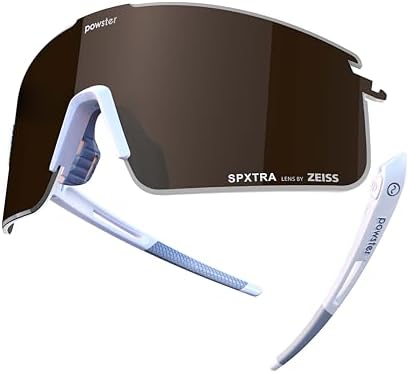
- TBB Score9.8
TrekBikesBlog (TBB) score is a ranking system that rates products on a scale of 1 to 10. The TrekBikesBlog score has no relationship or impact from any manufacturers or sales agent websites – it's an unbiased way to rate our products. Learn more
- BrandPowster

- TBB Score9.4
TrekBikesBlog (TBB) score is a ranking system that rates products on a scale of 1 to 10. The TrekBikesBlog score has no relationship or impact from any manufacturers or sales agent websites – it's an unbiased way to rate our products. Learn more
- BrandKAPVOE

- TBB Score9.0
TrekBikesBlog (TBB) score is a ranking system that rates products on a scale of 1 to 10. The TrekBikesBlog score has no relationship or impact from any manufacturers or sales agent websites – it's an unbiased way to rate our products. Learn more
- BrandSOL PRO
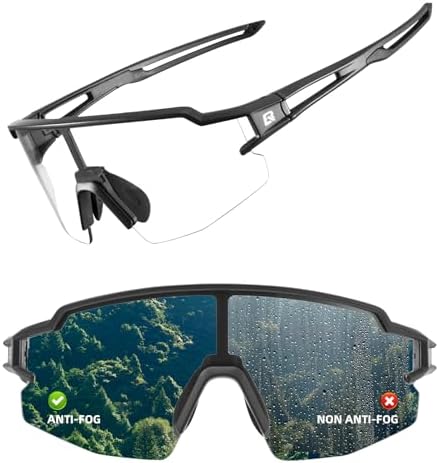
- TBB Score8.6
TrekBikesBlog (TBB) score is a ranking system that rates products on a scale of 1 to 10. The TrekBikesBlog score has no relationship or impact from any manufacturers or sales agent websites – it's an unbiased way to rate our products. Learn more
- BrandROCKBROS
Last update on 2026-11-27 / Affiliate links / Images, Product Titles, and Product Highlights from Amazon Product Advertising API
Dawn and Dusk Commuters
If your working day fixes your riding hours, you leave in half light and return in less. Your glasses must be close to clear at their darkest moments yet still shield your eyes from wind on fast descents into town. Interchangeable lenses or a very light fixed tint suit you best, and the frame must play well with the lights and reflective clothing that do the bigger safety job at those hours. This group should treat the glasses as one part of a visibility setup, not the whole of it.
Riders in Gray, Overcast Climates
Some regions hand you flat gray light for weeks at a time. There is plenty of light to ride by, but contrast vanishes, so wet patches, potholes and gravel all read as the same dull tone. Contrast boosting tints in amber or rose are built for exactly this problem, lifting edges and texture without darkening the scene much. If your climate sounds like this, tint choice matters more to you than frame fashion, and it is where your money should go.
Trail Riders Under Tree Cover
Forest trails swing between bright clearings and deep shade faster than any lens can adapt, and in the shade your eyes need every bit of light available. Mountain bikers in wooded terrain often ride in clear or very light lenses even at midday, accepting the squint in clearings as the price of seeing roots and holes in the dark sections. For this group, coverage and fog resistance outrank tint technology, because a fogged or narrow lens in the trees is a genuine hazard.
Visible Light Transmission, In Plain Terms
Lenses are rated by how much light they pass, called visible light transmission or VLT. Bright sun lenses pass about 10 to 20 percent. Low light lenses live at the other end, roughly 60 to 90 percent, and true clear lenses pass nearly everything. When you shop, match the number to your darkest typical ride; a commuter leaving before sunrise wants the highest transmission on offer, while an overcast day rider can accept the middle of the range in exchange for contrast tint.
Contrast Tint Versus Plain Clear
A clear lens protects your eyes and changes nothing else, which is sometimes all you need. Tinted low light lenses in yellow, amber or rose filter some blue light and make edges stand out against gray roads and green shade, which helps you pick out surface changes earlier. The trade is a slight color shift that some riders love and others find distracting. Neither choice is wrong; the question is whether your problem is darkness itself or the flat, low contrast look of dim scenes.
Adaptive Lenses That Reach Near Clear
Photochromic lenses darken in sun and lighten in shade, and the best of them for this job are the ones whose light state is nearly clear. Check both ends of the stated range, because a lens that only lightens to a medium tint will still be too dark at dusk. Our guide to the best photochromic cycling glasses compares how brands handle that range. Also note that they react to ultraviolet light, so they stay lighter behind a car windscreen style shield and change more slowly in cold weather.
Fog Resistance and Ventilation
Cool, damp air and a warm face are the recipe for fog, and low light riding serves up both. Lenses with an anti fog treatment on the inner surface, frames that hold the lens slightly off the face and small vents at the top edge all delay the moment your vision clouds at a traffic light. Fog is worst when you stop, so a frame you can pull slightly down your nose at stops, letting air behind the lens, is a practical old trick worth more than any coating.
Coverage That Seals Wind Without Trapping Moisture
Dim light rides are often cold rides, and cold air makes eyes stream, which blurs vision as surely as a dark lens does. A wide lens with a close fit at the brow and cheeks keeps the wind out of your eyes on descents. The balance is ventilation; a frame sealed like ski goggles will fog in minutes on a climb. Look for generous coverage with designed air paths, and test the fit by looking down, since gaps at the lower edge show up when you check the road just ahead of your wheel.
Choose clear when your rides include true darkness or near darkness, because any tint at all costs light you cannot spare. Choose yellow or amber when your problem is flat gray contrast, on overcast days and in open shade, where these tints sharpen the edges of the road without dimming the scene much. Choose rose when you split time between shade and bright clearings, since rose usually sits between the two, adding contrast while keeping a little more protection for the bright moments. Many riders end up owning one clear lens and one contrast lens and swapping by the forecast, which is cheaper than chasing a single perfect lens.
Think of your eyewear as a small kit rather than a single purchase. One frame with two or three swappable lenses covers dawn, gray days and sun, and spare low light lenses are inexpensive compared with a second full pair. If you need vision correction, start with the routes in our guide to the best prescription cycling glasses, because inserts and direct glazed lenses behave differently in dim light and the wrong choice wastes money. Add lights and reflective details for the hours when being seen matters more than seeing, since glasses do nothing to make you visible to drivers.
Clear and light tint lenses are among the cheapest in cycling eyewear, and the roundup of the best budget cycling glasses shows solid frames with low light lenses at around $25 to $50. Mid range glasses at about $50 to $110 add better frames, coatings and extra lenses in the box. Premium adaptive models over $110 earn their price mainly through wide range photochromic lenses. For most riders, one good frame with a clear and a contrast lens covers the whole dim light problem.
- Wearing your regular dark sunglasses at dusk because they are already on your helmet, and riding half blind through the shaded miles.
- Expecting a yellow lens to create light, when it can only improve contrast in light that already exists.
- Ignoring fog until the first cold morning, when your lenses cloud at every stop on the route.
- Buying a photochromic lens without checking its lightest state, and finding it still too dark for evening rides.
- Treating glasses as visibility gear, when drivers see your lights and reflectives, not your eyewear.
Clear and pale lenses show every scratch under streetlights, so store them in a hard case and never toss them loose into a bag. Rinse grit off before wiping, and use only a clean microfiber cloth. If your lenses carry an anti fog coating on the inner surface, do not scrub that side or use strong cleaners on it, because the coating is thin and wears away; a gentle rinse and air drying keep it working longest. Keep a spare clear lens for the day the main one finally clouds with wear.
What color lens is best for cycling in low light?
It depends on the kind of dimness. For near darkness, clear is best because it wastes no light. For gray, overcast days, amber and yellow tints sharpen contrast so surface changes stand out. Rose sits between the two and suits mixed shade and sun. Most riders who face all three conditions own a clear lens plus one contrast lens and swap in seconds.
Can you wear clear cycling glasses at night?
Yes, and clear is the correct choice at night. The glasses will not help you see farther, since that is your lights' job, but they keep cold wind, insects and road grit out of your eyes, which keeps your vision steady and your eyes from streaming on descents. Pair them with strong lights front and rear, because at night your safety depends far more on being seen and lighting the road than on eyewear.
Do yellow lenses really help you see better at dusk?
They help with contrast, not with brightness. A yellow tint filters some blue light, which makes edges, cracks and changes in the road surface easier to pick out in flat gray light. It does not add light, so in true darkness yellow is worse than clear. Riders who call yellow lenses magic are usually riding in overcast or shaded conditions, where contrast, not darkness, was their real problem.
Are photochromic glasses good for low light riding?
The right ones are. Look for a stated range whose light end is high, ideally passing 70 percent or more of light, and expect slower changes in cold weather. A lens that only reaches a medium tint at its lightest will disappoint you at dusk. Check the lightened state indoors under normal room light before a ride; if it looks like sunglasses on your face, it is not a true low light lens.
How do you stop cycling glasses fogging in cool, damp weather?
Start moving air: choose frames with vents or a fit that stands off your face, and pull the glasses slightly down your nose at stops so warm air escapes. Anti fog coatings help but fade with wiping, so rinse rather than rub. Breathing out through your mouth, directed downward, also keeps your exhale off the lens at lights. If fogging is constant, a slightly looser brow fit usually fixes it better than any spray.
Decide whether your enemy is darkness or flat contrast, pick the tint and transmission to match, and use the product table above to compare frames and spare lens bundles. Dim hours are some of the quietest and best miles of the week, and the best cycling glasses for low light let you claim them with clear eyes, steady vision and one less excuse to stay on the trainer.


Best Cycling Gloves for Women (2026): Buying Guide

Best 2 Bike Bike Rack in 2026: A Buying Guide

Best Action Camera With Stabilization (2026): A Rider Buying Guide

Best Action Camera for Travel (2026): Small Cameras for Big Trips

Best Bike Rack for Fat Tire Bikes in 2026: Buying Guide and What to Check

Best Action Camera Under 50 Dollars (2026): Honest Expectations for Cheap Cameras

Best Bike Tires for Commuting in 2026: Buying Guide and What to Check

Best Bike Tires in 2026: Buying Guide and What to Check









