
Best Action Camera Under 500 (2026): Flagship Guide for Riders
A budget of $500 changes the question completely. You are no longer asking what a camera can do, because at this level the answer is nearly everything: big sensors, mature stabilization, native waterproofing and high frame rates. The real question is how to divide the money between the camera, its accessories and its future. Finding the best action camera under 500 dollars is an exercise in allocation, not survival.
This guide explains what flagship money actually buys over mid range models, where the previous generation trick saves serious cash, and how much of the $500 should stay in reserve for mounts, cards and batteries. The comparison table below shows the main types, and the sections after it break the decision down piece by piece.
Compare Products

- TBB Score9.0
TrekBikesBlog (TBB) score is a ranking system that rates products on a scale of 1 to 10. The TrekBikesBlog score has no relationship or impact from any manufacturers or sales agent websites – it's an unbiased way to rate our products. Learn more
- BrandDJI

- TBB Score9.2
TrekBikesBlog (TBB) score is a ranking system that rates products on a scale of 1 to 10. The TrekBikesBlog score has no relationship or impact from any manufacturers or sales agent websites – it's an unbiased way to rate our products. Learn more
- BrandInsta360

- TBB Score9.2
TrekBikesBlog (TBB) score is a ranking system that rates products on a scale of 1 to 10. The TrekBikesBlog score has no relationship or impact from any manufacturers or sales agent websites – it's an unbiased way to rate our products. Learn more
- BrandInsta360

- TBB Score9.2
TrekBikesBlog (TBB) score is a ranking system that rates products on a scale of 1 to 10. The TrekBikesBlog score has no relationship or impact from any manufacturers or sales agent websites – it's an unbiased way to rate our products. Learn more
- BrandGoPro
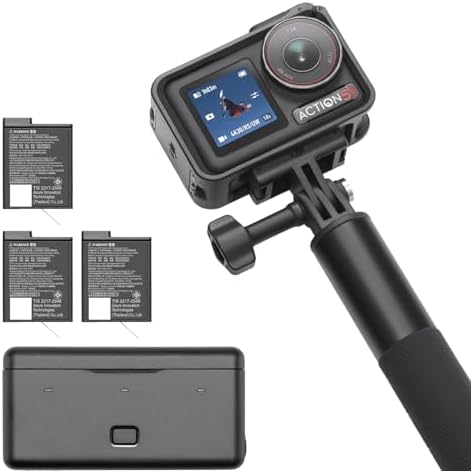
DJI Osmo Action 5 Pro Adventure Combo, Waterproof Action Camera
- TBB Score9.4
TrekBikesBlog (TBB) score is a ranking system that rates products on a scale of 1 to 10. The TrekBikesBlog score has no relationship or impact from any manufacturers or sales agent websites – it's an unbiased way to rate our products. Learn more
- BrandDJI

- TBB Score9.2
TrekBikesBlog (TBB) score is a ranking system that rates products on a scale of 1 to 10. The TrekBikesBlog score has no relationship or impact from any manufacturers or sales agent websites – it's an unbiased way to rate our products. Learn more
- BrandDJI

- TBB Score9.0
TrekBikesBlog (TBB) score is a ranking system that rates products on a scale of 1 to 10. The TrekBikesBlog score has no relationship or impact from any manufacturers or sales agent websites – it's an unbiased way to rate our products. Learn more
- BrandGoPro

- TBB Score8.6
TrekBikesBlog (TBB) score is a ranking system that rates products on a scale of 1 to 10. The TrekBikesBlog score has no relationship or impact from any manufacturers or sales agent websites – it's an unbiased way to rate our products. Learn more
- BrandInsta360
Last update on 2026-11-28 / Affiliate links / Images, Product Titles, and Product Highlights from Amazon Product Advertising API
Creators Publishing Riding Content Regularly
If you post weekly, image quality and reliability stop being luxuries. Large sensors hold up in forest shade, strong stabilization saves clips that would otherwise be cut, and fast file handling shortens every edit. Creators comparing the whole field should start with our best action camera guide for the landscape, then use this article to spend the flagship budget where viewers actually notice the difference.
Riders Upgrading From a Phone
A modern phone films beautifully until it meets a trail: no durable mount, a battery your life depends on, and a screen one stone away from an expensive repair. A flagship action camera is the tool built for the job, waterproof without a case and happy on a chest or helmet mount. Riders who film from the bike itself, as in our best action camera for motorcycle guide, gain the most from the better stabilization and heat behavior at this level.
One and Done Buyers Who Keep Gear for Years
Some buyers would rather spend once and film for five years. Flagships serve them well: firmware support runs longer, accessories stay available, and the footage ages gracefully as screens improve. For this group the smartest version of the plan is often last season's flagship at a discount, with the savings funding the accessories that make the camera complete from day one.
Sensor Size and Image Quality
At this budget you can demand the largest sensors in the class, around 1 inch, and the difference shows everywhere: cleaner shadows, better dusk footage, less frantic noise reduction. Resolution modes climb to 5.3K and beyond, but sensor size remains the quality foundation. Judge cameras by footage in mixed light, a forest trail at midday or a street at dusk, because flagship claims in full sun tell you almost nothing about the class gap you are paying for.
Stabilization Maturity
Flagship stabilization is a generation ahead of budget systems: smoother on rough descents, steadier horizon leveling, and fewer artifacts when light drops. It also works across more modes, including higher frame rates where cheap cameras switch it off. If your filming is mostly bikes on rough ground, this is the feature that justifies the tier on its own. Sample clips to review should include running or riding over broken surfaces, not the gentle walking shots every maker prefers to publish.
Native Waterproofing and Build
Under $500, bodies are waterproof to around 10 meters or more without a case, which keeps audio clear and the camera slim on the mount. Buttons work with gloves, screens survive knocks, and lens protectors swap in seconds when scratched. Dive housings extend depth for divers, but everyday rain, rivers and pool filming need nothing extra. This toughness is a quiet part of the value: the camera you dare to use in weather is the camera that gets the footage.
Screens, Controls and Mods
Front screens let you frame yourself for trail side commentary, and bright rear screens stay readable in sun. Flagship ecosystems add options like media mods with better microphones, display mods and max lens style attachments that widen the view. A 360 flagship also lives in this budget, and our best 360 action camera guide explains that different creative route. Do not buy mods on day one; buy the camera, learn your gaps, then add the one mod that fixes a real problem.
Battery, Heat and Reliability
Flagships manage heat better and record longer at high settings, and their batteries tend to be larger with honest runtime near the claims. Firmware support matters here too: makers refine thermal behavior and fix bugs on flagships first. Warranty and repair networks are stronger at this level, which counts when the camera is a tool you depend on weekly. Reliability rarely appears on spec sheets, yet over three years it separates this tier from everything below it.
The Accessory Budget Inside the $500
Reserve roughly 15 to 25 percent of the budget for the kit around the camera: two fast memory cards, at least one spare battery, the mounts for your actual sports and a small case. A $500 camera with no card films nothing, and flagship resolutions demand fast cards that cost more than budget ones. Buyers who forget this end up owning a superb camera and a drawer of excuses, so plan the whole purchase as one list, not a camera followed by surprises. Judged as a complete package, the best action camera under 500 dollars almost always beats a bare flagship at the same total spend.
The sharpest move under $500 is often last season's flagship. When a new model lands, the outgoing one typically drops well below its launch price while keeping the same sensor family, waterproofing and most of the image quality. The money saved funds every accessory on your list with change. Check that firmware support and spare batteries remain available, and skip this route only when the new model's headline feature, usually a bigger sensor or much better battery, is exactly the thing your filming needs. Mid range current models, covered in our best budget action camera guide, are the other sensible rival to a full price flagship.
- Spending the whole $500 on the camera body: cards, spares and mounts are part of the tool, not optional extras.
- Chasing resolution over sensor size: a huge pixel count on a small sensor loses to a big sensor every evening.
- Buying every mod at checkout: accessories bought before you know your gaps become drawer stock within a month.
- Ignoring last season's flagship: the discount route often delivers 90 percent of the tool for far less money.
- Skipping the heat check: long summer recordings expose thermal limits that spec sheets never mention.
Flagships reward basic care with long service. Rinse the sealed body in fresh water after salt or mud, open and dry the battery door seals, and keep the lens protector fresh, since it is designed to be the sacrificial part. Update firmware through the maker app, store batteries at partial charge between trips, and keep the camera in a padded case rather than loose in a gear bag. Register the warranty, save the receipt, and your cost per year of filming will beat every cheaper camera you might have replaced twice.
Should you buy the newest flagship or the previous generation?
For most riders, the previous generation at a discount is the better value: image quality in this class improves in steps, not leaps, and the savings complete your accessory kit. Choose the newest model when its headline change targets your exact weakness, like night filming or battery life, and when you keep cameras long enough that the longer support window matters. Either way, you are buying into the same mounts and habits, so the decision is about money, not ecosystem.
What accessories should a $500 action camera budget include?
Two fast memory cards of 128 GB or more, one or two spare batteries with a dual charger, the two mounts you will use weekly, and a compact case. Add a lens protector pack because flagship lenses are costly to repair. That kit usually takes about $75 to $125 of the budget, which is why a camera priced around $375 to $425 often makes the strongest total package under $500.
Is an action camera under $500 good enough for low light filming?
The best of them are as good as this camera class gets after dark: large sensors, sensible night modes and processing that respects detail. Good enough depends on the scene. Under street lights or strong bike lights, footage looks clean and usable. In near darkness, even flagships show their limits, because physics applies at every price. If night filming is your main use, weigh sensor size above every other feature when comparing models in this tier.
How long will a flagship action camera stay current?
Realistically four to six years of happy service. Image quality at this level already exceeds what most screens and platforms display, so older flagships age slowly, and mounts and batteries stay available for years. Software features shift faster than hardware quality, which is why the practical limit is usually app support and battery supply rather than the camera itself. Buyers who accept that horizon get excellent value per year from a single purchase.
What separates a $500 action camera from a $250 one?
Sensor size first, then stabilization quality, native waterproofing, heat behavior, screens and support. Each gap is modest alone; together they decide whether footage from a rough, dim, wet ride is publishable or deleted. The $250 class films a sunny ride nearly as well, and honest buyers should admit how much of their filming is sunny. The flagship earns its price on the hard days, and whether those days fill your calendar is the real buying question.
Spend the budget as a system: a flagship or discounted flagship body, the right cards and spares, and nothing you have not identified a use for. Chosen that way, the best action camera under 500 dollars stops being a gadget purchase and becomes a tool that quietly handles your hardest filming days. Start from the product table above, then trim the list until every dollar has a job.


Best Action Camera for Dash Cam Use (2026): Loop, Power and Heat

Best Apeman Action Cameras: Which Type Suits Your Riding? (2026)
Best Bike Computer Under 50 (2026): Budget Buying Guide

Best Cycling Backpacks

Best Cycling Gloves for Women (2026): Buying Guide

Best 2 Bike Bike Rack in 2026: A Buying Guide

Best Action Camera With Stabilization (2026): A Rider Buying Guide

Best Cycling Glasses for Low Light (2026): Buying Guide









