Best Bike Trainer for Beginners in 2026: Buying Guide and What to Check
Your first trainer has one job: make indoor riding easy enough that you keep doing it. The best bike trainer for beginners is rarely the most advanced model. It is the one that sets up in minutes, feels stable at low speed, runs quietly enough for your home, and does not hide extra costs behind the headline price.
This guide is written for first time indoor riders choosing from the whole best bike trainer category, with the emphasis on setup simplicity and confidence rather than pro level data. Read the user groups first, compare the key features in the table below, and you will know which type fits your home and your goals.
Compare Products

- TBB Score9.0
TrekBikesBlog (TBB) score is a ranking system that rates products on a scale of 1 to 10. The TrekBikesBlog score has no relationship or impact from any manufacturers or sales agent websites – it's an unbiased way to rate our products. Learn more
- BrandELITE

- TBB Score8.8
TrekBikesBlog (TBB) score is a ranking system that rates products on a scale of 1 to 10. The TrekBikesBlog score has no relationship or impact from any manufacturers or sales agent websites – it's an unbiased way to rate our products. Learn more
- BrandAlpcour

- TBB Score8.8
TrekBikesBlog (TBB) score is a ranking system that rates products on a scale of 1 to 10. The TrekBikesBlog score has no relationship or impact from any manufacturers or sales agent websites – it's an unbiased way to rate our products. Learn more
- BrandAlpcour

- TBB Score8.8
TrekBikesBlog (TBB) score is a ranking system that rates products on a scale of 1 to 10. The TrekBikesBlog score has no relationship or impact from any manufacturers or sales agent websites – it's an unbiased way to rate our products. Learn more
- BrandSportneer

- TBB Score8.6
TrekBikesBlog (TBB) score is a ranking system that rates products on a scale of 1 to 10. The TrekBikesBlog score has no relationship or impact from any manufacturers or sales agent websites – it's an unbiased way to rate our products. Learn more
- BrandSportneer

- TBB Score8.4
TrekBikesBlog (TBB) score is a ranking system that rates products on a scale of 1 to 10. The TrekBikesBlog score has no relationship or impact from any manufacturers or sales agent websites – it's an unbiased way to rate our products. Learn more
- BrandBalanceFrom

- TBB Score8.6
TrekBikesBlog (TBB) score is a ranking system that rates products on a scale of 1 to 10. The TrekBikesBlog score has no relationship or impact from any manufacturers or sales agent websites – it's an unbiased way to rate our products. Learn more
- BrandYaheetech
- TBB Score8.4
TrekBikesBlog (TBB) score is a ranking system that rates products on a scale of 1 to 10. The TrekBikesBlog score has no relationship or impact from any manufacturers or sales agent websites – it's an unbiased way to rate our products. Learn more
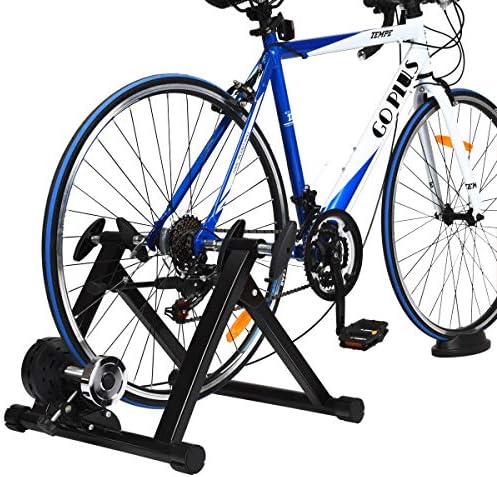
- BrandGoplus

- TBB Score8.2
TrekBikesBlog (TBB) score is a ranking system that rates products on a scale of 1 to 10. The TrekBikesBlog score has no relationship or impact from any manufacturers or sales agent websites – it's an unbiased way to rate our products. Learn more
- BrandFDW

- TBB Score8.0
TrekBikesBlog (TBB) score is a ranking system that rates products on a scale of 1 to 10. The TrekBikesBlog score has no relationship or impact from any manufacturers or sales agent websites – it's an unbiased way to rate our products. Learn more
- BrandSaris
Last update on 2026-11-24 / Affiliate links / Images, Product Titles, and Product Highlights from Amazon Product Advertising API
First Time Indoor Riders on a Tight Budget
Start with a basic wheel on magnetic or fluid unit. Your bike clamps in with its rear wheel on, setup takes minutes, and the price stays low while you learn whether indoor riding suits you. Our roundup of the best budget bike trainer models shows what the entry tier includes and what it leaves out.
New Riders Who Want App Guided Workouts
If following a plan on screen is what will keep you consistent, look at entry level smart trainers that change resistance automatically in apps. A best smart bike trainer model removes the guesswork from intervals, because the app sets the load and you simply pedal. Just budget for the subscription on top of the hardware.
Apartment Beginners Who Need Quiet and Small Storage
Prioritize a trainer that folds flat and a smooth trainer tire, because tire hum is the sound your neighbors will hear. Wheel on units store in a closet and set up without tools. If your floor is hard, a thick trainer mat is not optional, since it absorbs the vibration that travels through apartment floors.
Setup Simplicity: Keep Your Rear Wheel On
As a beginner, choose a wheel on trainer. Your bike clamps in by its rear axle, you ride, and you can take the bike back outside in a minute. Direct drive trainers ask you to remove the rear wheel and fit a cassette, which is a fine skill to learn later but a barrier in week one. Rollers are the hardest of all, because you balance the whole time, so leave those for experienced riders.
Resistance Type and How It Feels When You Are New
Magnetic trainers give fixed resistance levels you change with a lever, which is predictable and cheap. Fluid trainers get harder the faster the wheel spins, which feels more like real road riding and needs no adjustment. Either suits a beginner. What matters most is smooth, even resistance at low speeds, because new riders spend much of each session pedaling slowly while they build fitness.
Connectivity, Sensors and Virtual Power
A plain trainer plus a Bluetooth speed sensor lets apps estimate your power, which is enough for guided workouts and virtual group rides. Built in smart trainers measure power directly and adjust resistance for you. The beginner question is not accuracy, it is motivation: if seeing your avatar move on screen keeps you riding through winter, the sensor is the cheapest upgrade you will ever buy.
Stability and Confidence at Low Speed
New riders wobble, start and stop often, and sometimes grab the bars hard. Look for a wide leg stance, a frame rated comfortably above your weight, and a clamp that holds the axle without flex. A stable trainer lets you focus on pedaling instead of balance. Avoid narrow budget frames that rock when you stand up, because one wobbly session is enough to put beginners off indoor riding for good.
Noise Level in Shared Spaces
Most beginner trainers are quieter than new riders fear, provided the tire is smooth. A trainer specific tire on the rear wheel, inflated to the pressure on its sidewall, cuts the hum dramatically compared with a road tire. Fluid units are usually the quietest wheel on option. Whatever you choose, ride on a mat, and avoid early morning sessions against a shared wall if your building carries sound.
Total Cost of Entry, Not Just the Trainer
Add up the whole kit before comparing prices: the trainer, a trainer tire at around $30 to $50, a mat, a front wheel riser block, a fan, and any app subscription. A cheap trainer can cost more overall than a mid range one that bundles a riser block and resists tire wear better. Knowing the full number up front stops the common pattern of buying the trainer in week one and the essentials in week three.
Fit the trainer tire, swap in the steel skewer that comes with most wheel on trainers, and clamp the bike in on a mat. Set the roller so it presses the tire firmly without flattening it. Put a fan in front of you and a towel over the frame, because you will sweat more indoors than on any outdoor ride. Keep your first sessions short, around 20 to 30 minutes, and finish each one by wiping the bike down. After a month of consistent riding, many beginners start eyeing a best direct drive bike trainer for its quiet, wheel off feel, and that is a fine upgrade path once the habit is real.
- Buying rollers as a first trainer, then quitting because balancing at low speed feels unsafe.
- Training on a good road tire, which the roller overheats and wears flat within weeks.
- Skipping the fan, which makes a 30 minute session feel twice as long and soaks the bike in sweat.
- Setting resistance as hard as it goes on day one, which wrecks knees and motivation by the third ride.
- Forgetting the front wheel riser, which tilts you forward and loads your wrists for the whole session.
Wipe sweat off the bike and trainer after every ride, and wash the towel and mat regularly, since salt builds up fast indoors. Release the roller pressure when you store a wheel on trainer, so the tire does not sit flattened in one spot. Check the clamp and skewer monthly, keep the resistance unit free of dust, and store everything dry. A trainer treated this way easily outlasts the bike it holds.
What is the best bike trainer for beginners?
For most beginners it is a wheel on magnetic or fluid trainer: quick to set up, stable, and affordable while you build the habit. Choose one rated above your weight with a folding frame. If you already know you will follow app workouts daily, an entry smart trainer saves a later upgrade.
What should I look for in a bike trainer for beginners?
Look for easy clamping, a wide stable base, resistance that feels smooth at low speed, and a price that leaves room for the tire, mat and fan. Check the maximum weight rating and confirm the trainer fits your wheel size. Published noise figures help less than a smooth tire does.
Do beginners need a smart trainer?
No. A basic trainer and a speed sensor cover structured riding for a fraction of the price, and apps can estimate power from the sensor. Smart trainers earn their cost when automatic resistance changes keep you honest in intervals. Many riders upgrade after one winter, once they know indoor riding is a lasting habit.
How many hours a week should a beginner ride a bike trainer?
Two to four hours a week, split into three or four short sessions, builds real fitness without burning you out. Indoor riding has no coasting, so 45 minutes on a trainer feels like a longer outdoor ride. Add time gradually, and take at least one full rest day between hard sessions in the first month.
Is a bike trainer worth it for a beginner?
Yes, if bad weather or dark evenings are what stop you riding. A trainer turns lost winter weeks into steady training and keeps your bike fit familiar. It is not worth it if you know you will always choose an outdoor ride instead, so borrow time on a friend's setup first if you are unsure.
How do you clean a bike trainer?
Wipe the frame and resistance unit with a damp cloth after rides, and clean the roller surface weekly so rubber dust does not build into a slippery layer. Vacuum the mat, because grit under the trainer legs makes the whole setup rock. Keep cleaning sprays away from the resistance unit seals.
Best Action Camera for Hunting (2026): Mounts, Light and Battery Guide

Best Electric Motor for Mountain Bike: Every Type Explained Side by Side for 2026

Best Comfort Bike Seats (2026): Buying Guide
Best Collapsible Water Bottles (2026): Buying Guide for Riders

Best Crank Power Meters (2026): Fit and Accuracy Guide

Best Black Diamond Headlamp Types Explained for Riders (2026)

Best Fenix Headlamps: Which Model Suits Your Riding? (2026)
Best Action Camera for Surfing in 2026: A Buying Guide