
Best Comfort Bike Seats (2026): Buying Guide
Saddle pain ends more riding habits than bad weather ever will. The frustrating part is that the cure is rarely the softest seat on the shelf. Comfort comes from a saddle whose width matches your sit bones, whose shape keeps pressure off soft tissue, and whose position on the bike is set correctly. This guide explains how to choose the best comfort bike seat for your body and your riding posture, and how to set it up so the first long ride feels as good as the fitting promised.
The product table below lists specific comfort saddles, from wide padded cruiser seats to supportive endurance shapes. The sections after it cover measurement, materials and setup, which together decide comfort more than any single product claim.
Compare Products

- TBB Score9.2
TrekBikesBlog (TBB) score is a ranking system that rates products on a scale of 1 to 10. The TrekBikesBlog score has no relationship or impact from any manufacturers or sales agent websites – it's an unbiased way to rate our products. Learn more
- BrandWTB

Wittkop Bike Seat, Waterproof Bicycle Saddle for Comfort, Mountain &
- TBB Score9.0
TrekBikesBlog (TBB) score is a ranking system that rates products on a scale of 1 to 10. The TrekBikesBlog score has no relationship or impact from any manufacturers or sales agent websites – it's an unbiased way to rate our products. Learn more
- BrandWittkop
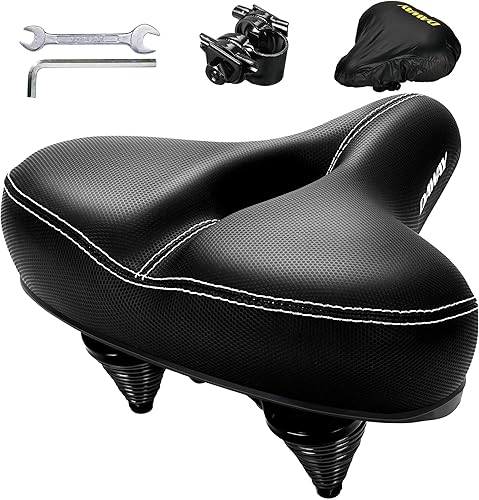
- TBB Score8.8
TrekBikesBlog (TBB) score is a ranking system that rates products on a scale of 1 to 10. The TrekBikesBlog score has no relationship or impact from any manufacturers or sales agent websites – it's an unbiased way to rate our products. Learn more
- BrandN/A

ROCKBROS Women's Bike Saddle Ergonomic Wide Seat Waterproof Cushion
- TBB Score9.2
TrekBikesBlog (TBB) score is a ranking system that rates products on a scale of 1 to 10. The TrekBikesBlog score has no relationship or impact from any manufacturers or sales agent websites – it's an unbiased way to rate our products. Learn more
- BrandROCKBROS

- TBB Score9.2
TrekBikesBlog (TBB) score is a ranking system that rates products on a scale of 1 to 10. The TrekBikesBlog score has no relationship or impact from any manufacturers or sales agent websites – it's an unbiased way to rate our products. Learn more
- BrandLCYMD

- TBB Score8.8
TrekBikesBlog (TBB) score is a ranking system that rates products on a scale of 1 to 10. The TrekBikesBlog score has no relationship or impact from any manufacturers or sales agent websites – it's an unbiased way to rate our products. Learn more
- BrandDAWAY

- TBB Score8.8
TrekBikesBlog (TBB) score is a ranking system that rates products on a scale of 1 to 10. The TrekBikesBlog score has no relationship or impact from any manufacturers or sales agent websites – it's an unbiased way to rate our products. Learn more
- BrandSerfas

- TBB Score9.0
TrekBikesBlog (TBB) score is a ranking system that rates products on a scale of 1 to 10. The TrekBikesBlog score has no relationship or impact from any manufacturers or sales agent websites – it's an unbiased way to rate our products. Learn more
- BrandN/A

- TBB Score9.2
TrekBikesBlog (TBB) score is a ranking system that rates products on a scale of 1 to 10. The TrekBikesBlog score has no relationship or impact from any manufacturers or sales agent websites – it's an unbiased way to rate our products. Learn more
- BrandFIFTY-FIFTY

- TBB Score8.8
TrekBikesBlog (TBB) score is a ranking system that rates products on a scale of 1 to 10. The TrekBikesBlog score has no relationship or impact from any manufacturers or sales agent websites – it's an unbiased way to rate our products. Learn more
- BrandTwomaples

- TBB Score8.8
TrekBikesBlog (TBB) score is a ranking system that rates products on a scale of 1 to 10. The TrekBikesBlog score has no relationship or impact from any manufacturers or sales agent websites – it's an unbiased way to rate our products. Learn more
- BrandHUGEOAKS

- TBB Score8.6
TrekBikesBlog (TBB) score is a ranking system that rates products on a scale of 1 to 10. The TrekBikesBlog score has no relationship or impact from any manufacturers or sales agent websites – it's an unbiased way to rate our products. Learn more
- BrandN/A
Last update on 2026-11-24 / Affiliate links / Images, Product Titles, and Product Highlights from Amazon Product Advertising API
Upright riders on cruisers and city bikes
If you sit nearly vertical, most of your weight lands on the saddle rather than your hands, so you need real width at the back and padding that supports without swallowing your sit bones. A wide saddle around 180 to 260 mm with short nose works well here, and springs or elastomer bumpers underneath help on rough streets. Avoid narrow racing shapes entirely; they put pressure exactly where an upright rider carries weight.
Returning and older riders rebuilding time in the saddle
After years away from cycling, soft tissue is unconditioned, flexibility is reduced, and an overly aggressive position hurts quickly. A medium width saddle with a pressure relief channel, moderate cushioning and a slightly raised rear gives support while you rebuild tolerance over weeks. Pair it with a modest handlebar height rather than chasing comfort through padding alone. If pain, numbness or tingling persists beyond the first few weeks of gradual riding, have a clinician or a professional bike fitter check you rather than swapping saddles endlessly.
Commuters and leisure riders spending an hour or more per ride
Once rides stretch past an hour, shape beats softness. A medium width endurance saddle with a cutout or deep channel, firmer padding and a flatter profile keeps you supported as you shift around, and it works with padded shorts the way it was designed to. Riders building toward longer days should also read our guide to the best bike seat for long rides, which focuses on the demands of three plus hours in the saddle.
Saddle width and your sit bone spacing
Your weight should rest on the two sit bones, and those bones sit a measurable distance apart, commonly about 100 to 160 mm depending on the person. The saddle's rear must be wide enough that both bones land on supported padding, with a little room to shift. Many bike shops have a simple measuring pad you sit on to reveal the spacing; at home, a piece of corrugated cardboard on a firm chair leaves dents you can measure. Women on average need wider support than men, which is why our guides to the best bike seat for women and the best bike seat for men treat width ranges separately.
Cutouts, channels and pressure relief
Pain and numbness in soft tissue come from pressure where no bone exists to bear it. A full length cutout or a deep central channel moves that pressure back onto the sit bones. Riders who lean forward benefit most, since forward posture rolls weight onto the front of the saddle. Not everyone loves a cutout: some riders feel the edges. A channel design is the gentler compromise, and a short nose reduces front pressure further when you ride in the drops or climb out of the saddle.
Padding type and density
Thick gel padding feels wonderful for the first fifteen minutes and can feel worse by minute forty, because your sit bones sink in and the surrounding material pushes up into soft tissue. Firmer foam holds your bones on the surface and distributes pressure better on longer rides. Memory foam sits between the two and suits medium length leisure rides. Match density to ride duration: soft for short upright trips, medium for an hour or so, and firmer, thinner padding for long or athletic riding. Your sit bones adapt over a few weeks, so judge a saddle after several rides, not one.
Saddle shape and profile
Look at the saddle from the side and from above. A flat profile suits riders who move around and sit in several spots; a curved or dipped profile locks you into one position, which some riders find secure and others find restrictive. From above, T shaped saddles are wide at the back and narrow quickly, suiting upright riders, while longer, narrower shapes suit leaned forward positions. The rear edge matters as well: a raised tail gives you something to push against on climbs, while a flat rear lets you slide back on long descents.
Shell, rails and suspension elements
Under the padding, a flexible shell absorbs vibration and shapes how the saddle gives under load; a rigid shell under soft padding can feel harsh on broken pavement. Steel rails are the durable budget choice, lighter alloys and titanium save weight, and carbon rails demand compatible seatpost clamps. Some comfort saddles add coil springs or rubber elastomers between shell and rails, which genuinely helps upright riders on rough streets. Check rail standard and clamp fit before ordering, since exotic rail shapes need matching hardware.
Cover material and weather resistance
The cover takes rain, sweat and friction. Microfiber and modern synthetic covers shrug off weather, dry quickly and grip riding shorts just enough to stop sliding. Leather covers mold to your shape over time and breathe beautifully, but they need proofing and protection from rain, and the break in period is real. Perforations and textured zones are minor details that help on hot days. For a bike parked outside or ridden in all weather, a sealed synthetic cover is the low maintenance answer.
Measure your sit bone spacing first, then choose a saddle a little wider than that number so both bones stay supported when you shift. On the bike, set saddle height so your knee keeps a soft bend at the bottom of the stroke, and start with the saddle level using a spirit level across the top. Tilt is the comfort dial: a degree or two nose down can relieve front pressure, but more sends you sliding forward onto your hands. Move in 1 to 2 mm steps, ride at least thirty minutes between changes, and change one thing at a time. For the complete category view beyond comfort models, see our guide to the best bike seat shapes for every riding style.
- Buying the widest, softest saddle available, then sinking into the padding and increasing soft tissue pressure on longer rides.
- Guessing at width instead of measuring sit bone spacing, so the saddle supports the wrong anatomy entirely.
- Judging a saddle on one short ride, before your body has had the two to three weeks it needs to adapt.
- Changing saddle, height and tilt all at once, leaving you unable to tell which change helped or hurt.
- Ignoring handlebar height, when raising the bars slightly often fixes saddle pressure more than a new seat does.
- Riding through persistent numbness, which is a signal to change setup or seek professional advice, not to tough it out.
Keep the cover clean with a damp cloth and mild soap, and let it dry out of direct sun, which cracks both synthetics and leather over time. Leather saddles need an occasional coat of the maker's proofing treatment and a rain cover when parked outside. Check rail bolts twice a season, because a saddle that creeps nose down mid ride usually has a loosening clamp rather than a shape problem. Store the bike dry, and if the padding ever feels packed down and dead in the center after years of use, that is honest wear: the shell and foam have done their service and a replacement will feel like a new bike.
Why does my bike seat hurt even with lots of padding?
Usually because the padding lets your sit bones sink until the material between them presses upward into soft tissue. A firmer saddle of the correct width keeps your weight on the bones themselves, which are built to carry it. Setup matters just as much: a saddle tilted too far up at the nose or set too high creates pain that no amount of gel can fix, so check position before buying anything.
How wide should a comfort bike seat be?
Start from your sit bone measurement and add roughly 20 to 30 mm, so both bones rest fully on the rear platform with room to shift. Upright riders often land in the 170 to 210 mm range or wider, while leaned forward riders do well narrower. If your thighs rub the saddle edges when pedaling, the shape is too wide at the middle, regardless of what the rear measures.
Are cutout saddles better for comfort?
For many riders, yes, especially those who lean forward or who feel numbness on longer rides. The opening removes material where pressure causes trouble and keeps load on the sit bones. Some riders find cutout edges noticeable, and for them a deep channel without a full opening works better. This is a personal fit question, so if possible, test ride or buy from a seller with a comfort guarantee and a real return window.
How long does it take to get used to a new bike seat?
Expect two to three weeks of regular riding. Your sit bones and surrounding tissue adapt to the new pressure pattern, and mild soreness in the first rides is normal and fades. Sharp pain, bruising or numbness that lingers off the bike is not normal adaptation; shorten rides, recheck height and tilt, and speak with a clinician or fitter if those symptoms persist rather than pushing through them.
Can padded shorts replace a comfort saddle?
They complement each other rather than substitute. Shorts add a thin, dense pad right against your body and reduce friction, which helps on almost any saddle. But shorts cannot correct a saddle that is too narrow for your sit bones or tilted into your soft tissue. Get the saddle shape and setup right first; then padded shorts extend comfortable ride time further, particularly past the one hour mark.
Measure your sit bones, match width and shape to your posture, and set height and tilt in small steps. Comfort follows those three decisions far more reliably than it follows thick padding, and the best comfort bike seat for you is the one your body stops noticing after an hour. Use the product table above to compare shapes side by side before you order.

Best Collapsible Water Bottles (2026): Buying Guide for Riders

Best Crank Power Meters (2026): Fit and Accuracy Guide

Best Black Diamond Headlamp Types Explained for Riders (2026)

Best Fenix Headlamps: Which Model Suits Your Riding? (2026)
Best Action Camera for Surfing in 2026: A Buying Guide
Best Action Camera Under 200 Dollars (2026): What the Extra Money Buys

Best Camelbak Water Bottles: Which Type Suits Your Riding? (2026)

Best Bike Seat for Prostate in 2026: Buying Guide and What to Check










