
Best Electric Motor for Mountain Bike: Every Type Explained Side by Side for 2026
Choosing a motor for a mountain bike feels confusing because the same watts can feel strong on one trail and weak on another. Placement, torque delivery, sensors, and battery fit all change how the bike climbs and handles. This guide compares each motor type clearly so you can match the system to your trails.
Start with the best electric motor for mountain bike basics in the comparison table below, then use the sections that follow to check fit, gearing, and running costs. You will find buying guidance here, not product reviews.
Compare Products

- TBB Score8.4
TrekBikesBlog (TBB) score is a ranking system that rates products on a scale of 1 to 10. The TrekBikesBlog score has no relationship or impact from any manufacturers or sales agent websites – it's an unbiased way to rate our products. Learn more
- BrandN/A

- TBB Score8.4
TrekBikesBlog (TBB) score is a ranking system that rates products on a scale of 1 to 10. The TrekBikesBlog score has no relationship or impact from any manufacturers or sales agent websites – it's an unbiased way to rate our products. Learn more
- BrandN/A

- TBB Score9.0
TrekBikesBlog (TBB) score is a ranking system that rates products on a scale of 1 to 10. The TrekBikesBlog score has no relationship or impact from any manufacturers or sales agent websites – it's an unbiased way to rate our products. Learn more
- BrandKtaxon

Electric Bicycle Conversion Kit, 48V 1500W Ebike 20" Rear Hub
- TBB Score8.8
TrekBikesBlog (TBB) score is a ranking system that rates products on a scale of 1 to 10. The TrekBikesBlog score has no relationship or impact from any manufacturers or sales agent websites – it's an unbiased way to rate our products. Learn more
- BrandN/A

- TBB Score8.4
TrekBikesBlog (TBB) score is a ranking system that rates products on a scale of 1 to 10. The TrekBikesBlog score has no relationship or impact from any manufacturers or sales agent websites – it's an unbiased way to rate our products. Learn more
- BrandN/A
- TBB Score7.4
TrekBikesBlog (TBB) score is a ranking system that rates products on a scale of 1 to 10. The TrekBikesBlog score has no relationship or impact from any manufacturers or sales agent websites – it's an unbiased way to rate our products. Learn more
- BrandN/A

- TBB Score7.8
TrekBikesBlog (TBB) score is a ranking system that rates products on a scale of 1 to 10. The TrekBikesBlog score has no relationship or impact from any manufacturers or sales agent websites – it's an unbiased way to rate our products. Learn more
- BrandN/A
Last update on 2026-11-24 / Affiliate links / Images, Product Titles, and Product Highlights from Amazon Product Advertising API
Electric motors for mountain bike use fall into two main placements, mid drive and hub drive, and each changes weight balance, gear use, and service needs. A third choice sits behind the hardware, namely how the system senses your pedaling and delivers power. Understanding these ideas first makes every later spec easier to judge, and the product table above gives typical price ranges for each type.
Mid Drive Motors for Climbing and Trail Control
A mid drive motor sits at the bottom bracket and drives the chain, so the gears you shift also change how the motor works. In a low gear it delivers strong climbing force at low speed, and in a higher gear it supports faster riding on open ground. Because the weight sits low and central, handling stays close to a regular trail bike on turns and drops, on both hardtail and full suspension frames.
The tradeoff is extra chain and gear wear, since motor force passes through the drivetrain on every ride. If most of your riding involves steep and technical climbs, this placement is usually the most capable option. Riders comparing complete bikes as well can see our guide to the best e mountain bike motor for a closely related view.
Hub Drive Motors for Simpler and Quieter Builds
A hub drive motor sits inside the front or rear wheel hub and pushes the wheel directly, without using the chain. Rear hub motors feel more natural than front hub motors on loose ground, because the driven wheel already carries more of your weight. Hub systems place less stress on the chain and gears, and wheel weight is their main compromise on rough ground.
The limits show on long steep climbs, where a hub motor cannot use your gears and may lose efficiency or build heat. For smooth trails, forest roads, and gentle grades, a hub system can be a sensible and lower cost choice.
Pedal Assist Feel, Sensors, and Throttle Control
Two motors with equal power can feel very different because of their sensors. A torque sensor measures how hard you press the pedals and adds support in proportion, which feels smooth on trails. A cadence sensor mainly detects that the pedals are turning, so support can arrive in a more sudden and less precise way.
Throttle control adds support without pedaling, which helps when starting on a hill. Trail rules may limit throttle use, and a throttle drains the battery faster when it replaces pedaling. If throttle matters to you, read our guide to the best electric mountain bike with throttle alongside your local rules.
The right motor depends less on maximum power and more on your trails, fitness goals, and the bike you already own.
Trail Riders Who Climb Steep and Technical Ground
If your rides include long climbs, loose switchbacks, and slow moves over rocks, choose a mid drive motor with strong torque and a smooth torque sensor. Low central weight protects handling when the trail gets tight. Pair the motor with wide range gearing so you can keep a steady cadence instead of forcing a hard gear.
New Riders Who Want Gentle and Predictable Support
If you are returning to riding or building fitness, predictable low assist matters more than peak output. Look for several assist levels that step up gradually, a clear display, and a system that starts smoothly from a stop. Our guide to the best beginner electric mountain bike covers complete bikes shaped around that same gentle learning curve.
Riders Converting a Bike They Already Own
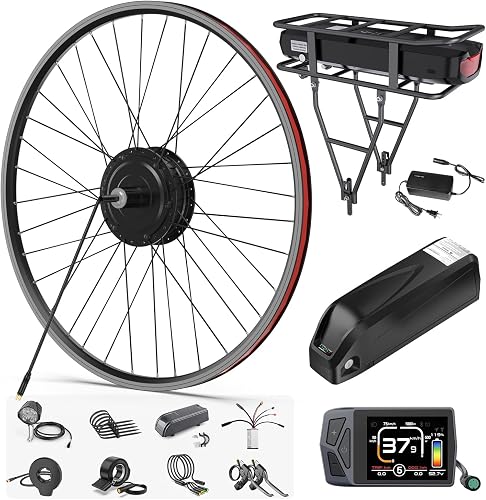
Conversion kits let you add a motor to an existing hardtail or full suspension bike, which can save money when the frame and brakes are sound. The catch is fit, since the bottom bracket, chainline, battery space, and brake strength must all suit motor power. A factory built e bike avoids most fit work and gives simpler warranty support, yet it costs more up front.
Work through power, battery, and fit in that order, because the best electric motor for mountain bike trails is the one that matches all three. A motor that looks strong on paper can still disappoint if it does not fit your frame or match your gears. Use the product table above as a quick reference while you check each factor below.
Power, Torque, and What the Numbers Mean
Power in watts describes how much work the motor can do, while torque in newton meters describes turning force at low speed. Trail climbing depends heavily on torque, because you need force when the wheel turns slowly on a steep grade. High watts alone do not guarantee strong climbing if torque delivery is weak or abrupt.
Very powerful motors add weight and can overwhelm tires and brakes on loose ground, so choose enough torque for your steepest regular climb and stop there.
Battery Size, Range, and the Wh Rating
Battery capacity is measured in watt hours, often written as Wh battery size in listings. More watt hours generally mean more range, but rider weight, assist level, hills, wind, and tire type change the result a great deal. Think in terms of your longest normal ride, plus a margin for a wrong turn or a headwind on the way home.
Removable batteries suit riders who must charge indoors or store the bike in a cold garage. Built in batteries can sit lower and look cleaner, yet charging requires bringing the whole bike to an outlet.
Drivetrain and Gearing With Motor Power
A mid drive motor multiplies its force through your gears, so gear range matters as much as motor output. A single front chainring with a wide range cassette is the common trail setup because it is simple and leaves room for the motor housing. Motor power also wears chains and cassettes faster than pedaling alone, so budget for stronger parts rated for e bike torque.
Riders who mainly want pedal support can compare complete models in our guide to the best electric assist mountain bike.
Wheel Size, Tires, and Brakes
Wheel size affects both fit and feel, since a hub motor must match your wheel diameter and a mid drive must suit the gearing paired with that wheel. Larger 29 inch wheels roll over rocks more easily, while 27.5 inch wheels can feel quicker to turn and leave more clearance on smaller frames.
Tires carry extra motor weight and force, so trail tires with strong sidewalls and good grip are a wise match. Tubeless setups let you run lower pressure for traction and reduce flat risk from thorns and sharp rocks. Hydraulic disc brakes deserve special attention too, because a motor adds speed on climbs and weight on descents that your brakes must control.
Frame Fit, Mounting, and Sizing
For a factory bike, the motor, battery, and frame were matched at the factory, so your main job is normal frame size selection for your height and reach. For a kit, measure the bottom bracket width and type, check chainstay clearance, and confirm where the battery can mount. Full suspension frames leave less room for a battery than hardtail mountain bikes do.
Smaller riders should pay close attention to battery placement and total bike weight, since lifting a heavy bike onto a rack is part of ownership. For fit needs shaped by frame geometry, see our guide to the best women's electric mountain bike for more detail.
Riding Style, Trail Type, and E Bike Classes
Cross country riders who cover distance may value efficiency and lighter weight over maximum torque, while trail riders who climb to descend usually value torque, cooling, and strong brakes more. Your local trails also decide which e bike class is allowed, and class rules can limit motor power, top assisted speed, and throttle use.
Class 1 bikes provide pedal assist only and are allowed on the most trails, while Class 2 adds a throttle and Class 3 raises assisted speed but is often limited to roads. Always check local rules and trail signs before you ride, and do not judge a trail motor by commuter e bikes specs built for paved routes.
Small habits protect range and parts life more than any single spec. Check tire pressure before rides, because soft tires waste battery energy and risk rim damage on rocks. Spin a steady cadence in a sensible gear instead of forcing a hard gear, which strains both the motor and the chain.
Clean and lube the chain every 100 to 200 miles, more often after mud or dust, and charge the battery indoors at room temperature. Have a professional tune up the bike yearly. After a crash, inspect the motor housing, cables, and battery mount, and treat grinding, clicking, or sudden power cuts as signs to get service.
What features matter most in an electric motor for a mountain bike?
Torque delivery, sensor smoothness, and frame fit matter most in an electric motor for a mountain bike. Strong torque helps on steep climbs, while a good torque sensor keeps support smooth on loose ground where a sudden surge can break traction. Also check service access near you, because a motor with local dealer support is easier to own than a slightly stronger motor with no nearby help.
What e bike class rules apply to electric motors for mountain bikes?
E bike class rules for electric motors for mountain bikes depend on your state and on each trail system, with Class 1 pedal assist models having the widest access. One point many riders miss is that a land manager can ban all e bikes from a trail even when state law allows them. Check the trailhead sign or the manager website before riding a new area.
How much should I spend on an electric motor for a mountain bike?
Expect conversion kits at about $600 to $1,500 and complete trail bikes at about $2,000 to $6,000, depending on battery size and parts. Spending more mainly buys smoother sensors, lighter weight, and better brakes and suspension around the motor. Set aside part of your budget for a stronger chain, brake pads, and tires in the first year, because motor use wears those parts faster.
How do I check whether an electric motor fits my mountain bike frame?
You check electric motor fit by measuring the bottom bracket, confirming battery space, and checking brake and tire clearance. For kits, the maker fit list for your frame type is the safest starting point, and a photo of your bottom bracket area helps a seller confirm the match. Also consider total weight, because a frame that fits on paper can still feel too heavy to lift onto a car rack.
How far can a mountain bike travel on one charge with an electric motor?
A mountain bike with an electric motor can often travel about 25 to 60 miles on one charge, depending on battery size, terrain, and assist level. Range drops sharply when you climb for most of the ride or use the highest assist setting throughout. Plan your route so the return leg is mostly downhill or on lower assist, which leaves a safety margin when the battery reads low.
Start with placement, since mid drive and hub drive motors suit different trails and budgets. Then check torque, battery size in watt hours, gear range, brake strength, and frame fit before you compare prices. Those checks matter more than a single headline power number.
Use the product table above to narrow your shortlist, then confirm class rules and service support where you live. When those pieces line up, the best electric motor for mountain bike for you is simply the system that fits your bike, your trails, and your budget without forcing compromises elsewhere.


Best Comfort Bike Seats (2026): Buying Guide
Best Collapsible Water Bottles (2026): Buying Guide for Riders

Best Crank Power Meters (2026): Fit and Accuracy Guide

Best Black Diamond Headlamp Types Explained for Riders (2026)

Best Fenix Headlamps: Which Model Suits Your Riding? (2026)
Best Action Camera for Surfing in 2026: A Buying Guide
Best Action Camera Under 200 Dollars (2026): What the Extra Money Buys

Best Camelbak Water Bottles: Which Type Suits Your Riding? (2026)










