
Best Bike Seat for Prostate in 2026: Buying Guide and What to Check
About an hour into a ride, the pattern is familiar: your legs feel fine, but a dull numbness creeps into the soft tissue between your sit bones, and shifting around on the saddle only buys a few minutes of relief. That numbness is a pressure problem, not a fitness problem. Choosing the best bike seat for prostate comfort is less about finding the softest cushion and more about moving your weight onto the two sit bones, where your body is built to carry it, and off the perineum in between.
This guide explains the shapes, widths and setup checks that actually lower that pressure. You will find the main saddle types compared in the comparison table below, and if you want the wider picture first, our guide to the best bike seat covers general saddle choice for every kind of rider. Here the focus stays narrow: what changes when prostate comfort is the reason you are shopping.
Compare Products

- TBB Score9.0
TrekBikesBlog (TBB) score is a ranking system that rates products on a scale of 1 to 10. The TrekBikesBlog score has no relationship or impact from any manufacturers or sales agent websites – it's an unbiased way to rate our products. Learn more
- BrandN/A

- TBB Score8.8
TrekBikesBlog (TBB) score is a ranking system that rates products on a scale of 1 to 10. The TrekBikesBlog score has no relationship or impact from any manufacturers or sales agent websites – it's an unbiased way to rate our products. Learn more
- BrandSelle Italia

- TBB Score8.2
TrekBikesBlog (TBB) score is a ranking system that rates products on a scale of 1 to 10. The TrekBikesBlog score has no relationship or impact from any manufacturers or sales agent websites – it's an unbiased way to rate our products. Learn more
- BrandN/A

- TBB Score8.8
TrekBikesBlog (TBB) score is a ranking system that rates products on a scale of 1 to 10. The TrekBikesBlog score has no relationship or impact from any manufacturers or sales agent websites – it's an unbiased way to rate our products. Learn more
- BrandN/A

- TBB Score8.8
TrekBikesBlog (TBB) score is a ranking system that rates products on a scale of 1 to 10. The TrekBikesBlog score has no relationship or impact from any manufacturers or sales agent websites – it's an unbiased way to rate our products. Learn more
- BrandN/A

- TBB Score8.6
TrekBikesBlog (TBB) score is a ranking system that rates products on a scale of 1 to 10. The TrekBikesBlog score has no relationship or impact from any manufacturers or sales agent websites – it's an unbiased way to rate our products. Learn more
- BrandCDYWD

- TBB Score8.6
TrekBikesBlog (TBB) score is a ranking system that rates products on a scale of 1 to 10. The TrekBikesBlog score has no relationship or impact from any manufacturers or sales agent websites – it's an unbiased way to rate our products. Learn more
- BrandN/A

Noseless Bike Seat Cushion for Men & Women - Extra
- TBB Score8.8
TrekBikesBlog (TBB) score is a ranking system that rates products on a scale of 1 to 10. The TrekBikesBlog score has no relationship or impact from any manufacturers or sales agent websites – it's an unbiased way to rate our products. Learn more
- BrandTwomaples
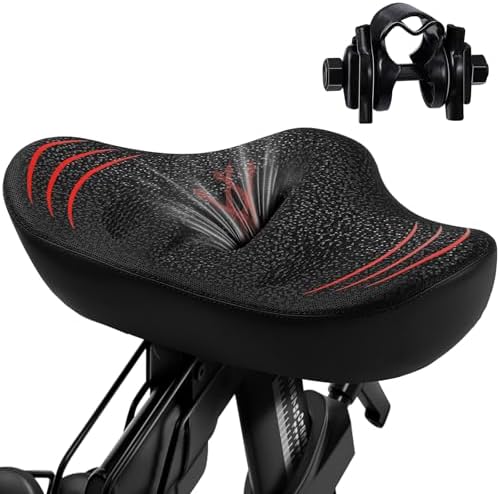
Upgrade Oversize Bike Seat for Men Women, Extra Wide Noseless
- TBB Score8.8
TrekBikesBlog (TBB) score is a ranking system that rates products on a scale of 1 to 10. The TrekBikesBlog score has no relationship or impact from any manufacturers or sales agent websites – it's an unbiased way to rate our products. Learn more
- BrandTXPEP

- TBB Score9.0
TrekBikesBlog (TBB) score is a ranking system that rates products on a scale of 1 to 10. The TrekBikesBlog score has no relationship or impact from any manufacturers or sales agent websites – it's an unbiased way to rate our products. Learn more
- BrandBLUEWIND
Last update on 2026-11-22 / Affiliate links / Images, Product Titles, and Product Highlights from Amazon Product Advertising API
Riders Who Go Numb After an Hour in the Saddle
If numbness shows up on longer commutes, weekend fitness rides or club outings, you need a saddle with a genuine relief channel and a width that matches your bones. Riders in this group usually sit in one position for long stretches, so the saddle has to work without constant standing breaks. Start with a mid width cutout model and firm padding rather than a thick gel seat.
Riders Managing an Enlarged Prostate or Recovering From Treatment
An enlarged prostate, prostatitis or recovery from prostate treatment can make ordinary saddles unbearable, because swollen or healing tissue tolerates very little pressure. A deep channel or a short nose design can make gentle riding comfortable again, but a saddle is a comfort aid, not a treatment. Get cleared by your urologist before returning to the bike, and treat lingering numbness, trouble urinating or blood in the urine as reasons to call the doctor, not reasons to buy another seat.
Indoor Trainer Riders Who Rarely Stand Up
On a trainer the bike does not move under you, you rarely coast or stand, and pressure stays constant in one spot for the whole session. That makes trainer riders the group most likely to go numb even on a saddle that feels fine outdoors. A slightly wider seat with a full length channel works well here, and because weight matters less indoors, you can choose comfort over light rails and thin shells.
Center Cutout or Relief Channel
The cutout is the feature that matters most for this purchase. A full length channel removes material along the whole middle of the saddle, while a short cutout only opens a window under the perineum. Both aim to suspend the soft tissue so it carries no load. Look for smooth, rounded channel edges, because a hard edge can pinch and create a new pressure line. A channel that is too narrow for your anatomy does little good, which is why this feature has to be read together with width.
Nose Shape and Length
The nose is what presses upward when you roll your hips forward into an aggressive position. Short nose saddles end sooner, so there is less material under the soft tissue when you lean into the drops. A slightly dropped nose reduces pressure further at the cost of some control on steep seated climbs. Fully noseless designs remove the pressure point entirely and suit upright city riding, but they give up the steering control the nose provides between your thighs on a road bike.
Width Matched to Your Sit Bones
Saddles come in widths from about 130 mm to about 175 mm, and the right one depends on the spacing of your sit bones, not on your jeans size. If the saddle is too narrow, your sit bones hang off the edges and your weight drops into the middle, defeating the channel. If it is too wide, the wings rub the backs of your thighs with every stroke. Our guide to the best bike seat for men covers general fit basics for male riders, but for prostate comfort the width match is the single measurement worth getting right.
Padding Firmness and Shell Flex
It feels backwards, but firm thin padding usually protects the perineum better than thick soft gel. On a very soft seat your sit bones sink in, and the displaced padding pushes up into the channel from below, recreating the pressure you were trying to escape. A firm pad keeps you perched on top, so the channel stays open. Shell flex matters too: a shell with a little give absorbs road buzz, while a rigid racing shell passes every vibration straight through.
Rails, Tilt Range and Adjustment
Rails decide how far forward or back the saddle can slide, and you need enough range to land your sit bones on the wide rear platform rather than the narrow middle. A two bolt seatpost clamp lets you change tilt in tiny steps, which matters because a single degree of tilt can be the difference between relief and numbness. Steel rails are heavier but shrug off clamping mistakes; carbon rails save weight and demand careful torque.
Start with the saddle level, then experiment with a slight nose down tilt of about one to two degrees if pressure persists. Going further tips you forward onto your hands and creates shoulder and wrist pain instead. Set height so your knee keeps a soft bend at the bottom of the stroke; a seat that is too high rocks your hips side to side and grinds soft tissue on every pedal stroke. Build in standing breaks every 10 to 15 minutes on long rides, because no shape fully replaces simply unloading the area. One warning belongs here rather than in a footnote: numbness that lingers after a ride, difficulty urinating, blood in the urine or new erectile problems need a doctor promptly. Those are medical signs, not fit problems.
Under $50 you will find basic channel saddles with steel rails and simple foam. They are a sensible first test of whether a cutout helps you at all. Between about $50 and $120, shells get shaped more carefully, foams hold their firmness longer, and rails shed weight. Over $120 buys carbon rails, very light shells and precisely molded channels. None of that extra money buys a medical benefit; it buys fit precision and durability. If your priority is soft, upright comfort rather than a pressure channel, our guide to the best comfort bike seat looks at wide padded options built for that job instead.
- Buying the widest, softest seat on the shelf, which lets your sit bones sink until the padding presses exactly where the channel should protect you.
- Tilting the nose far down to escape pressure, which slides your weight forward and overloads your hands, wrists and shoulders.
- Setting the seat too high, which rocks your hips side to side and grinds soft tissue with every pedal stroke.
- Treating numbness as a normal part of riding, which can mask a simple fit problem or a medical issue that needs attention.
- Skipping the sit bone measurement, which leaves the most important fit number to luck even when the shape is right.
- Expecting a new saddle to fix pain caused by reach or handlebar height, which no seat can change.
Sweat and road grit shorten a saddle life faster than mileage does. Wipe the cover down after sweaty rides and let it dry before the bike goes back in a corner. Check the rail clamp bolts every few months, because a saddle that slips mid ride usually slips into a nose up position that spikes pressure exactly where you least want it. Inspect the shell after any crash for cracks around the rail mounts, and replace a saddle when the foam packs down into a hard ridge or the cover tears. A well kept quality saddle lasts about three to five years of regular riding.
Does a cutout bike seat really lower pressure around the prostate?
Yes, by moving your weight onto the sit bones and leaving the soft tissue in the middle unloaded. Strictly speaking the prostate sits deeper inside the body; what the saddle presses on is the perineum, with its nerves and blood vessels, which is why numbness is the warning sign. A cutout only delivers that relief when the width matches your bones, because a mismatched saddle lets you slide back into the channel.
Is a noseless bike seat a good choice for prostate problems?
A noseless seat removes the pressure point completely and can be the right answer for short, upright trips on a city or comfort bike. The trade off is control: the nose helps steer and stabilizes the bike when you ride one handed or stand briefly. Most road and gravel riders do better with a short nose cutout design, which keeps some control while clearing the soft tissue.
How do I measure my sit bones at home for a bike seat?
Sit on a piece of corrugated cardboard placed on a hard chair, lean slightly forward as you would on the bike, then stand and measure the distance between the centers of the two dents. Add about 20 mm to that number to get your target saddle width. The same method works for every rider, and our guide to the best bike seat for women explains the wider spacing most women need and the shapes built around it.
When should numbness on the bike send me to a doctor?
See a doctor promptly if numbness lasts more than a day after a ride, keeps returning on short rides, or arrives with trouble starting urination, a weak stream, blood in the urine or new erectile difficulty. Those symptoms can point to a prostate or nerve problem that no saddle can fix. A urologist can also tell you whether riding should pause while treatment or healing runs its course.
Can a gel seat cover fix pressure on my current saddle?
Usually it makes things worse. A slip on cover adds bulk along the nose and in the middle, which is exactly where you need clearance, and it can bunch and shift during a ride. The money is better spent on padded shorts, which put the cushion on you rather than on the saddle, or saved toward a saddle of the correct width with a real channel.
Pressure relief on the bike comes from shape, width and setup working together, not from any single feature. Compare the shapes in the product table above, measure your sit bones before you order, and change tilt in small steps while you test. Chosen carefully, the best bike seat for prostate comfort should let you finish a ride thinking about the route rather than the saddle. And because this topic touches your health, talk with your own clinician about your personal situation before long or hard riding, especially after any prostate treatment.


Best Camelbak Water Bottles: Which Type Suits Your Riding? (2026)

Best Brita Water Bottles: Which Type Suits Your Riding? (2026)

Best Contigo Water Bottles: Which Type Suits Your Riding? (2026)

Best Fluid Bike Trainers in 2026: Buying Guide

Best 29-inch Mountain Bike Tires for 2026: How to Pick the Right One

Best Bike Lock for Scooter in 2026: Buying Guide and What to Check

Best Bike Lock for Commuting in 2026: Buying Guide and What to Check

Best Action Camera With Long Battery Life (2026): Runtime Guide for Riders










