
Best Brita Water Bottles: Which Type Suits Your Riding? (2026)
The water fountain at the gym tastes like a public pool, the office tap is worse, and buying bottled water for every ride adds up fast. That taste problem, and only that problem, is what a Brita bottle exists to solve. Picking the best brita water bottle means matching the filter format to how you ride, because the same small carbon filter sits inside three quite different bottles in this line.
Brita sells a hard sided plastic bottle, an insulated stainless steel bottle, and a soft squeeze sport bottle, all filtering through a straw as you sip. The comparison table below sets the three types side by side. For the broader picture across brands, start with our guide to the best water bottle, then come back here once you know a taste filter is what you want.
Compare Products

BRITA Premium Filter Water Bottle, Includes 1 Filter, Night Sky,
- TBB Score9.2
TrekBikesBlog (TBB) score is a ranking system that rates products on a scale of 1 to 10. The TrekBikesBlog score has no relationship or impact from any manufacturers or sales agent websites – it's an unbiased way to rate our products. Learn more
- BrandBRITA

- TBB Score9.0
TrekBikesBlog (TBB) score is a ranking system that rates products on a scale of 1 to 10. The TrekBikesBlog score has no relationship or impact from any manufacturers or sales agent websites – it's an unbiased way to rate our products. Learn more
- BrandBRITA
- TBB Score9.0
TrekBikesBlog (TBB) score is a ranking system that rates products on a scale of 1 to 10. The TrekBikesBlog score has no relationship or impact from any manufacturers or sales agent websites – it's an unbiased way to rate our products. Learn more
- BrandBRITA

- TBB Score9.0
TrekBikesBlog (TBB) score is a ranking system that rates products on a scale of 1 to 10. The TrekBikesBlog score has no relationship or impact from any manufacturers or sales agent websites – it's an unbiased way to rate our products. Learn more
- BrandBRITA

- TBB Score9.0
TrekBikesBlog (TBB) score is a ranking system that rates products on a scale of 1 to 10. The TrekBikesBlog score has no relationship or impact from any manufacturers or sales agent websites – it's an unbiased way to rate our products. Learn more
- BrandBRITA
Last update on 2026-11-22 / Affiliate links / Images, Product Titles, and Product Highlights from Amazon Product Advertising API
Riders Who Hate the Taste of Their Town Tap Water
If chlorine taste is the reason you under drink at work or skip the fountain on a ride, the hard plastic Brita bottle is the core of the line. The carbon filter in the straw strips out most of that taste as you sip, so treated municipal water goes down easily. This is a flavor fix for water that is already safe, and for many commuters that is the entire job.
Gym and Fountain Refillers on the Move
You refill wherever the day takes you: the gym, the train station, a hotel on a weekend trip. A Brita bottle makes all of those taps taste consistent. Riders packing for that kind of travel should also scan our guide to the best water bottle for travel, because a filtered bottle earns its space in a bag only if its size and lid suit the way you travel.
Spin Class and Indoor Training Riders
The soft squeeze sport version exists for you. It delivers water when you squeeze instead of demanding a hard sip through the filter, which matters when your breathing is already maxed out on an indoor bike. It is light, it shrugs off drops onto gym floors, and it costs little enough that keeping one in a gym bag and one at home is a realistic plan.
What the Filter Actually Does
Each Brita bottle filter is a small carbon element inside the straw. It reduces chlorine taste and odor, along with some common particles, and that is the honest limit of it. It does not remove bacteria, viruses, or lead, and it is not a purifier. Only fill it with treated tap water from a municipal supply. Backcountry creeks, wells of unknown quality, and foreign taps you cannot verify are jobs for a true purifying filter, not for a taste filter like this one.
Filter Life and Running Cost
Brita rates each bottle filter for about 40 gallons of water, which works out to roughly two months of steady daily use. When the filter is spent, the chlorine taste quietly comes back, so mark the change date on your phone calendar the day you install a new one. Filters are sold in multipacks and cost far less than bottled water over the same period, but they are a permanent running cost of this system, so count them when you compare prices against a plain bottle.
Bottle Formats in the Brita Line
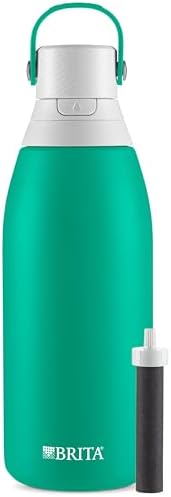
The hard plastic bottle holds about 26 ounces and is the everyday desk and commute pick. The stainless steel version holds about 32 ounces in an insulated body for riders who want cold water all day, though it competes with dedicated insulated bottles in our guide to the best stainless steel water bottle if filtering matters less than ice cold water at hour six. The squeeze sport bottle holds about 20 ounces and trades insulation and capacity for light weight and fast drinking.
Straw Sipping and Flow Rate
Drinking through a filter takes effort. You sip, the water passes through the carbon, and the flow is slower than an open sports cap. At a desk or a red light that is no issue. Mid climb, breathing hard, it can feel like drinking through a coffee stirrer. The squeeze bottle solves this by letting hand pressure push the water through, which is why so many indoor riders prefer it. Try to match the format to the hardest drinking moment of your typical ride, not the easiest one.
Size and Cage Fit
Brita bottles are shaped for cup holders and hands, not for bike cages. The hard plastic body is wide, and the tall steel version is wider and heavier still, while a standard cage expects a bottle of roughly 74 mm in diameter. Some riders force a fit in a flexy cage and regret it on the first rough descent. Measure before you buy, and plan on a bag pocket, a car console, or a desk as the real home for most Brita formats.
Taste at Home Versus on the Bike
Filtering shines where water sits in front of you all day. At home, though, a bottle is only one route to better taste, and plenty of riders keep a countertop pitcher for the kitchen and a plain bottle for the bike. If your water lives on a desk and never travels, our guide to the best glass water bottle covers the zero consumable option, since glass needs no replacement filters and adds no taste of its own.
The bottles themselves are cheap by premium bottle standards: the plastic formats run around $20 to $25, and the insulated steel version is around $30 to $35. The real price of the system is the filter habit, a few dollars per filter bought in multipacks, changed about every two months. Over a year that still undercuts a bottled water habit by a wide margin, and it roughly matches what you would spend keeping a basic reusable bottle replaced as lids wear out. Budget for the filters up front so the running cost never surprises you.
- Filling a Brita bottle from a creek or an untreated well, because a taste filter offers no protection against bacteria or parasites.
- Leaving a spent filter in place for months, which brings the chlorine taste back and makes sipping harder for no reason.
- Running hot water through the filter, since the carbon element is built for cold water and heat shortens its working life.
- Putting sports drink or juice through the filter straw, because sugars clog the carbon and the flavor lingers for days.
- Assuming the tall steel bottle fits a bike cage, which ends with it jammed in the frame or bouncing out on rough pavement.
- Sucking harder and harder as flow slows, when a slow sip is the bottle telling you the filter is done.
Wash the bottle and lid with warm soapy water regularly, and rinse a brand new filter under cold water and discard the first sips as the maker directs, because loose carbon dust colors the first fill. Let every part air dry with the lid open so the straw does not stay damp and stale. Store spare filters dry and sealed, away from cleaning chemicals whose fumes carbon happily absorbs. Replace the filter on schedule even if the taste still seems fine, since flow and performance fade gradually and are easy to miss.
Does a Brita water bottle make untreated water safe to drink?
No, and this is the most important line in this guide. The filter improves the taste of water that is already treated and safe. It is not rated to remove bacteria, viruses, or parasites. For trailheads, rural wells, or travel where the supply is doubtful, choose a bottle built around a membrane filter or a purifier instead, and keep the Brita for the taps at home, work, and the gym.
How often do you change the filter in a Brita bottle?
About every two months or 40 gallons, whichever arrives first. A rider who empties a 26 ounce bottle three times a day will get there faster than the calendar suggests. Watch for two signals: the chlorine taste creeping back and a sip that takes noticeably more effort. Both mean the carbon is spent. Writing the install date on a strip of tape on the bottle removes all the guesswork.
Why is water suddenly hard to sip from a Brita bottle?
Usually the filter is clogged or spent, but check the straw seating first, because a straw pushed in at a slight angle leaks air and kills the draw. Rinse the filter, reseat the straw firmly, and try again. If the flow stays weak, replace the filter. Sucking harder only tires you out and can pull the straw loose, which makes the problem look worse than it is.
Can you put sports drink in a Brita bottle?
Keep drink mix out of it. The filter is built for plain water, and sugar plus flavoring clogs the carbon pores and taints every fill afterward. On ride day, carry mix in a cheap plain sport bottle and keep the Brita for water at the office and the gym. That split also solves the cage problem, because the plain bottle is the one shaped for the bike anyway.
Does the Brita stainless steel bottle keep water cold on a summer ride?
The steel version is vacuum insulated, and Brita rates it to hold cold for many hours, so a morning fill with ice stays properly cold through a workday. What it will not do is fit most bottle cages, given its width and weight. Most owners use it in the car, at a desk, or on the sideline of a kids game rather than on the frame, and plan their on bike hydration around a standard sport bottle.
A Brita bottle is a taste tool, and judged on that job it is a good one. Match the format to your hardest drinking moment, budget for filters every couple of months, and use the product table above to compare the three types. The best brita water bottle for a spin studio regular is the squeeze bottle, while a desk bound commuter is better served by the hard plastic or steel. Buy for the tap you actually drink from, and the chlorine taste problem simply goes away.


Best Camelbak Water Bottles: Which Type Suits Your Riding? (2026)

Best Bike Seat for Prostate in 2026: Buying Guide and What to Check

Best Contigo Water Bottles: Which Type Suits Your Riding? (2026)

Best Fluid Bike Trainers in 2026: Buying Guide

Best 29-inch Mountain Bike Tires for 2026: How to Pick the Right One

Best Bike Lock for Scooter in 2026: Buying Guide and What to Check

Best Bike Lock for Commuting in 2026: Buying Guide and What to Check

Best Action Camera With Long Battery Life (2026): Runtime Guide for Riders










