Best Power Meters: Where to Mount and What to Trust
Training by feel and heart rate only tells you so much, which is why so many serious cyclists eventually go shopping for the best power meters they can afford. A power meter gives you an objective, instant number for exactly how hard you're working, independent of heat, fatigue, or caffeine skewing your heart rate. But not all power meters measure power the same way or in the same place, and where a meter mounts on your bike affects its accuracy, its install difficulty, and how easily you can move it between bikes. This guide breaks down the mounting types and the specs that actually matter.
Compare Products

- TBB Score9.2
TrekBikesBlog (TBB) score is a ranking system that rates products on a scale of 1 to 10. The TrekBikesBlog score has no relationship or impact from any manufacturers or sales agent websites – it's an unbiased way to rate our products. Learn more
- BrandGEOID

20A AC Power Meter, NEMA 5-15P to 5-20R Outlet Monitor
- TBB Score8.8
TrekBikesBlog (TBB) score is a ranking system that rates products on a scale of 1 to 10. The TrekBikesBlog score has no relationship or impact from any manufacturers or sales agent websites – it's an unbiased way to rate our products. Learn more
- BrandN/A

50A AC Power Meter, 240V NEMA 14-50P to 14-50R Outlet
- TBB Score8.0
TrekBikesBlog (TBB) score is a ranking system that rates products on a scale of 1 to 10. The TrekBikesBlog score has no relationship or impact from any manufacturers or sales agent websites – it's an unbiased way to rate our products. Learn more
- BrandN/A

Solar Power Meter Digital Solar Meter, Solar Irradiance Meter for
- TBB Score8.0
TrekBikesBlog (TBB) score is a ranking system that rates products on a scale of 1 to 10. The TrekBikesBlog score has no relationship or impact from any manufacturers or sales agent websites – it's an unbiased way to rate our products. Learn more
- BrandN/A

DROK Battery Coulometer, DC 8-100V 500A Split Type Multi Tester
- TBB Score9.2
TrekBikesBlog (TBB) score is a ranking system that rates products on a scale of 1 to 10. The TrekBikesBlog score has no relationship or impact from any manufacturers or sales agent websites – it's an unbiased way to rate our products. Learn more
- BrandN/A

- TBB Score9.0
TrekBikesBlog (TBB) score is a ranking system that rates products on a scale of 1 to 10. The TrekBikesBlog score has no relationship or impact from any manufacturers or sales agent websites – it's an unbiased way to rate our products. Learn more
- BrandAituzero

Kill A Watt Connect P4498 Electricity Usage Monitor Power Consumption
- TBB Score9.0
TrekBikesBlog (TBB) score is a ranking system that rates products on a scale of 1 to 10. The TrekBikesBlog score has no relationship or impact from any manufacturers or sales agent websites – it's an unbiased way to rate our products. Learn more
- BrandN/A

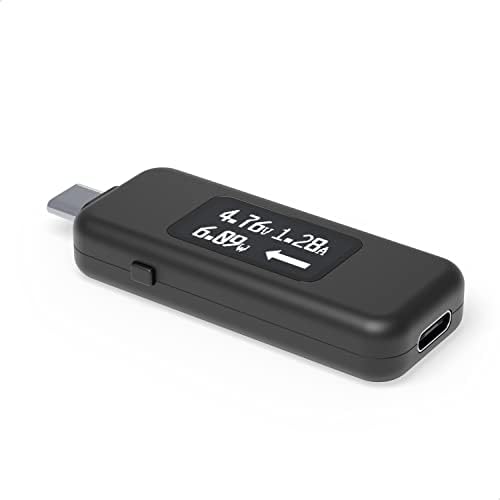
Klein Tools ET920 USB Power Meter, USB-A and USB-C Digital
- TBB Score8.8
TrekBikesBlog (TBB) score is a ranking system that rates products on a scale of 1 to 10. The TrekBikesBlog score has no relationship or impact from any manufacturers or sales agent websites – it's an unbiased way to rate our products. Learn more
- BrandN/A

SWR / Power METER for VHF / UHF Ham Radio
- TBB Score8.4
TrekBikesBlog (TBB) score is a ranking system that rates products on a scale of 1 to 10. The TrekBikesBlog score has no relationship or impact from any manufacturers or sales agent websites – it's an unbiased way to rate our products. Learn more
- BrandN/A

Electricity Usage Monitor, Briidea Power Consumption Watt Voltage Amp Meter
- TBB Score8.8
TrekBikesBlog (TBB) score is a ranking system that rates products on a scale of 1 to 10. The TrekBikesBlog score has no relationship or impact from any manufacturers or sales agent websites – it's an unbiased way to rate our products. Learn more
- BrandN/A

ChargerLAB Power-Z C240 Portable USB-C Tester, Digital Power Meter, Supports
- TBB Score8.6
TrekBikesBlog (TBB) score is a ranking system that rates products on a scale of 1 to 10. The TrekBikesBlog score has no relationship or impact from any manufacturers or sales agent websites – it's an unbiased way to rate our products. Learn more
- BrandN/A
- TBB Score9.0
TrekBikesBlog (TBB) score is a ranking system that rates products on a scale of 1 to 10. The TrekBikesBlog score has no relationship or impact from any manufacturers or sales agent websites – it's an unbiased way to rate our products. Learn more
- BrandPlugable

- TBB Score9.2
TrekBikesBlog (TBB) score is a ranking system that rates products on a scale of 1 to 10. The TrekBikesBlog score has no relationship or impact from any manufacturers or sales agent websites – it's an unbiased way to rate our products. Learn more
- BrandD YEDEMC

150A Watt Meter Power Analyzer High Precision RC & Digital
- TBB Score8.6
TrekBikesBlog (TBB) score is a ranking system that rates products on a scale of 1 to 10. The TrekBikesBlog score has no relationship or impact from any manufacturers or sales agent websites – it's an unbiased way to rate our products. Learn more
- BrandN/A
Last update on 2026-10-04 / Affiliate links / Images, Product Titles, and Product Highlights from Amazon Product Advertising API
Most power meters work using strain gauges, tiny sensors that flex slightly under load and measure the torque you're applying to the drivetrain. Combined with how fast that part of the drivetrain is rotating, the meter calculates your power output in watts many times per second. This basic approach has been around since the late 1980s and has only gotten more refined and more compact since, which is why accurate power meters now fit inside a pedal body instead of requiring a separate bulky unit.
Pedal-based meters put the strain gauges in the pedal axle or body itself, measuring force right where your foot applies it. Dual-pedal systems give you independent left and right leg power data, which is genuinely useful for spotting an imbalance between legs, especially after an injury. Pedals are also the easiest power meter type to move between bikes since you just swap the pedals themselves rather than any drivetrain components, which makes them a strong choice if you ride more than one bike regularly.
Crank-based meters put strain gauges in the crank arm or spider, the part connecting the crank to the chainring. Spider-based units typically measure total power from both legs combined, while some single-crank-arm models only measure one leg and estimate the other by doubling that number, which is worth checking before you buy if left/right balance data matters to you. Crank-based meters integrate cleanly with the drivetrain and tend to be well protected from the elements, but swapping them between bikes usually means swapping cranksets, not just clicking a pedal on and off.
Rear hub-based power meters measure power at the wheel rather than the crank, which has the advantage of capturing real-world drivetrain losses that crank-based systems simply can't see, since they measure before the chain and cassette. Bottom bracket-based meters take a different approach entirely, detecting torsional deflection in the bottom bracket shaft with photo-electric sensors and sending that data to your head unit. Both types tend to be less common than pedal or crank options, but they're worth knowing about since they measure power at a genuinely different point in the drivetrain than the more popular styles.
Every power meter publishes an accuracy rating, commonly a small percentage margin of error, and while chasing the absolute lowest number can become an obsession, consistency matters more day to day than a marginal accuracy difference between two well-reviewed models. Calibration, sometimes called setting the zero offset, resets the meter's baseline and should be done regularly, especially after temperature swings or before an important workout or race, since drift can quietly skew your numbers over weeks without an obvious symptom. Battery type matters for practical reasons too: coin-cell batteries are simple to replace anywhere but need periodic swapping, while rechargeable units avoid that but require you to remember to charge them, which is its own kind of maintenance.
Before buying power meters, confirm ANT+ or Bluetooth compatibility with whatever bike computer or head unit you're already using, since most modern units support both, but older head units sometimes don't. Crank-based and bottom bracket-based meters also need to match your crank length, chainring, and bottom bracket standard, so double-check compatibility with your specific bike rather than assuming a universal fit. Pedal-based meters sidestep most of this since they thread into standard pedal spindles, which is part of why they've become a popular default choice for riders who don't want to think about drivetrain compatibility at all. This is also why so many lists of the best power meters lean heavily toward pedal-based options for anyone shopping without a specific compatibility constraint in mind.
How accurate do power meters need to be?
Most reputable power meters land within a small margin of error, and consistency over time matters more for tracking training progress than chasing the absolute lowest published accuracy number. Big swings in accuracy usually point to a calibration issue rather than the meter itself.
What's the difference between single-leg and dual-leg power meters?
Single-leg meters measure one leg and estimate total power by doubling that number, while dual-leg meters measure both legs independently and can show left/right balance. Dual-leg systems cost more but give a fuller picture, especially useful after an injury or for addressing an imbalance.
Are pedal-based power meters easier to install than crank-based?
Generally yes. Pedal-based meters install like standard pedals and are easy to move between bikes, while crank-based meters typically require swapping crank arms or a spider, which is a bigger job and less convenient for multi-bike riders.
Do power meters need to be calibrated?
Yes, regularly. Calibrating, or setting the zero offset, resets the baseline reading and helps prevent drift from skewing your numbers, especially after temperature changes or before important training sessions.
Can I use one power meter on multiple bikes?
Pedal-based power meters are the easiest to move between bikes since you just swap the pedals. Crank-based meters can be moved too, but it typically requires swapping the crankset rather than a quick pedal change.
Do power meters work with any bike computer?
Most modern power meters broadcast over ANT+ and Bluetooth, which covers the majority of current bike computers and head units. Older head units may only support one protocol, so it's worth checking before buying either piece of equipment.
How long do power meter batteries last?
It depends on the battery type: replaceable coin-cell batteries often last many months between changes, while rechargeable units typically need charging every few weeks depending on usage, similar to charging a bike computer or smartwatch.
The best power meters for you come down to where you want it mounted, whether dual-leg data actually matters for your training, and how often you plan to swap it between bikes. Pedal-based meters offer the easiest installation and swapping, crank-based meters integrate cleanly for riders sticking with one bike, and hub or bottom bracket options serve specific niches worth understanding even if they're less common on the market.

The Best Bike Lights for Trick or Treating: Our Top Picks & What Matters
Best Saris Bike Racks: Top Picks for Secure and Reliable Bike Transport
Best Affordable Road Bike: Things To Know Before Buying One
Best Road Bike Helmets: Things To Consider Before Buying
What Are Things To Consider Before Buying The Best Single Speed Bikes
Best Hybrid Bikes For Women: The Detailed Guide To Pick One