
Best Cycling Shorts for Mountain Biking (2026): Buying Guide
Mountain biking asks more of your shorts than road riding does. You stand, shift your weight behind the saddle, brush past branches and sit back down dozens of times per ride, so a short that works on the road can snag, slide or wear through fast on the trail. Choosing the best cycling shorts for mountain biking means thinking about a system, the padded layer against your skin and the tough shell over it, rather than a single garment.
The product table below lists specific trail shorts and liners so you can see the trade offs quickly. For the full category overview, including road styles, see our guide to the best cycling shorts before you narrow in on the trail specific advice that follows.
Compare Products

- TBB Score8.6
TrekBikesBlog (TBB) score is a ranking system that rates products on a scale of 1 to 10. The TrekBikesBlog score has no relationship or impact from any manufacturers or sales agent websites – it's an unbiased way to rate our products. Learn more
- BrandEndura

- TBB Score8.8
TrekBikesBlog (TBB) score is a ranking system that rates products on a scale of 1 to 10. The TrekBikesBlog score has no relationship or impact from any manufacturers or sales agent websites – it's an unbiased way to rate our products. Learn more
- BrandROCKBROS

- TBB Score9.0
TrekBikesBlog (TBB) score is a ranking system that rates products on a scale of 1 to 10. The TrekBikesBlog score has no relationship or impact from any manufacturers or sales agent websites – it's an unbiased way to rate our products. Learn more
- BrandN/A

- TBB Score8.2
TrekBikesBlog (TBB) score is a ranking system that rates products on a scale of 1 to 10. The TrekBikesBlog score has no relationship or impact from any manufacturers or sales agent websites – it's an unbiased way to rate our products. Learn more
- BrandN/A
- TBB Score8.0
TrekBikesBlog (TBB) score is a ranking system that rates products on a scale of 1 to 10. The TrekBikesBlog score has no relationship or impact from any manufacturers or sales agent websites – it's an unbiased way to rate our products. Learn more
- BrandN/A

- TBB Score8.4
TrekBikesBlog (TBB) score is a ranking system that rates products on a scale of 1 to 10. The TrekBikesBlog score has no relationship or impact from any manufacturers or sales agent websites – it's an unbiased way to rate our products. Learn more
- BrandN/A

- TBB Score8.6
TrekBikesBlog (TBB) score is a ranking system that rates products on a scale of 1 to 10. The TrekBikesBlog score has no relationship or impact from any manufacturers or sales agent websites – it's an unbiased way to rate our products. Learn more
- BrandN/A
- TBB Score8.0
TrekBikesBlog (TBB) score is a ranking system that rates products on a scale of 1 to 10. The TrekBikesBlog score has no relationship or impact from any manufacturers or sales agent websites – it's an unbiased way to rate our products. Learn more
- BrandBikewa

- TBB Score8.6
TrekBikesBlog (TBB) score is a ranking system that rates products on a scale of 1 to 10. The TrekBikesBlog score has no relationship or impact from any manufacturers or sales agent websites – it's an unbiased way to rate our products. Learn more
- BrandKPSUN

- TBB Score8.6
TrekBikesBlog (TBB) score is a ranking system that rates products on a scale of 1 to 10. The TrekBikesBlog score has no relationship or impact from any manufacturers or sales agent websites – it's an unbiased way to rate our products. Learn more
- Brandbaleaf

- TBB Score8.8
TrekBikesBlog (TBB) score is a ranking system that rates products on a scale of 1 to 10. The TrekBikesBlog score has no relationship or impact from any manufacturers or sales agent websites – it's an unbiased way to rate our products. Learn more
- BrandSouke Sports
Last update on 2026-11-26 / Affiliate links / Images, Product Titles, and Product Highlights from Amazon Product Advertising API
Trail Riders Who Want a Baggy Short and Liner System
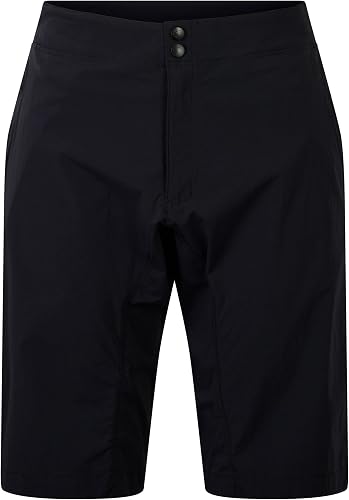
Most recreational trail riders are happiest in a two part system, a padded liner short under a loose outer shell. The shell gives you pockets, a normal shorts look at the trailhead and a layer of fabric that slides over roots and brush instead of tearing your skin layer. Look for liners that snap or loop into the shell so the two parts move together when you stand and sit, instead of the liner creeping down inside a loose short.
Cross Country Riders Who Pedal Hard for Hours
If your rides are long climbs and steady pedaling on smoother trails, snug lycra shorts or bib shorts borrowed from road riding make sense. You give up pockets and crash protection, but you gain a pad that stays exactly in place and fabric that never flaps or catches on the saddle during fast seated efforts. Many cross country riders wear a lightweight shell over bibs only for the descent or the drive home.
Enduro and Bike Park Riders Who Wear Knee Pads
Riders who pedal up and descend hard need shorts built around pads and gravity riding. The shell must be long enough to cover the top of your knee pads with no gap of bare skin when your leg bends, and roomy enough through the thigh to slide over pad straps. Abrasion resistant fabric matters more than weight here, because this group falls more often and slides on loose surfaces where thin lycra would shred in one crash.
Liner Shorts, Baggy Shells and One Piece Options
The first decision is the format. A liner short is a light mesh short with a pad, designed to be worn under any outer short you already own. A baggy trail short usually bundles a shell and a liner that attach together. One piece lycra shorts are the third option, with no shell at all. Liners give you flexibility across outfits, while bundled systems fit together better and cost less than buying the parts separately. Whichever you choose, the pad is the part that touches you, and our guide to the best padded cycling shorts explains the pad shapes that suit mixed seated and standing riding.
Pad Thickness for Standing and Sitting
Trail riding splits your time between sitting on climbs and standing on descents, so the ideal pad is moderate, roughly 8 to 12 mm, and flexible enough to fold with your body when you move off the back of the saddle. Very thick pads bunch when you stand and can feel like they push you forward. Slim pads with a smooth, stretchy surface also dry faster after stream crossings and rain, which matters more off road than on clean pavement.
Shell Fabric and Abrasion Resistance
The shell earns its keep by surviving contact with brush, grit and the ground. Woven fabrics with some mechanical stretch resist tearing better than knitted road fabrics, and a water repellent finish sheds light spray so the short does not soak up mud weight. Check the seat area in particular, because it rubs on the saddle with grit trapped between, and reinforced seat panels delay the worn shiny spot that eventually splits. Lighter shells breathe better for summer climbing but give up some of this toughness.
Pockets and Storage Placement
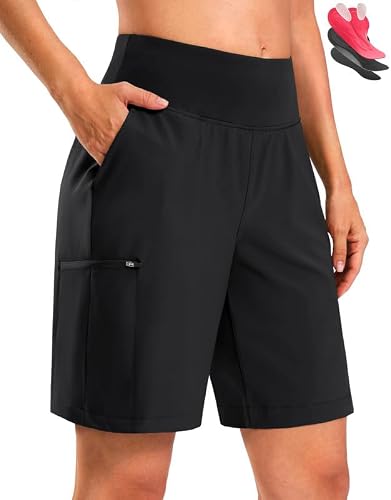
Trail shorts earn their pockets in a way road shorts do not. Look for at least one zippered pocket placed on the side of the thigh or the back of the waistband, where a phone or keys will not bounce against your leg as you pedal. Front hand pockets are fine for the parking lot but poor on the bike. Some shells add a small pocket sized for a multi tool or a snack bar. Avoid deep cargo pockets low on the leg, because loaded pockets swing with every pedal stroke.
Waist Adjustment and Saddle Clearance
A good trail shell stays up without a belt and never hooks on the saddle nose when you drop behind it. Internal waist adjusters or a low profile hook closure keep the fit stable as you move, and a higher back panel covers the gap when you bend forward. Test the clearance by standing, then sliding back off the saddle, then sitting again. If the front of the short catches the saddle nose on the way back, choose a slimmer cut or a stretch panel at the front.
Fit for the trail means fitted where the pad touches you and relaxed everywhere else. The liner should hug like road shorts, with the pad centered and no loose mesh, while the shell should let you squat, step over logs and pedal without pulling at the knee. Cuts vary between brands and between ranges, so check the fit notes in our guides to the best men's cycling shorts and the best women's cycling shorts, because trail lines often size differently from the same brand's road lines. When in doubt between sizes, the one whose liner pad stays put when you move is the right one.
Padded liners bought on their own run around $30 to $60. A complete baggy short with a liner included usually costs about $70 to $130, with the extra money buying tougher shell fabric, better pockets and a shaped pad. Premium shells over $130 add lighter fabrics and refined waist systems, but the pad inside is often the same as the middle tier. If your budget forces one choice, put the money into the liner and pad first, because that is where comfort is decided.
- Using a thick road pad for trail riding, because bulky pads bunch and chafe when you stand and move on the bike.
- Choosing a shell so long and loose that it hooks the saddle nose every time you move back.
- Wearing a baggy shell with no padded liner on long climbs, which leaves you unprotected where it matters most.
- Buying trail shorts with only open front pockets, so your phone bounces out on the first rough descent.
- Ignoring knee pad overlap, which leaves a strip of skin exposed above the pad that sunburns and scrapes.
Shake and brush dried mud off the shell before washing, because grit left in the fabric grinds through fibers in the wash. Wash the liner after every ride like any padded short, in cold water with no fabric softener, and hang both parts to dry out of direct sun. Check the snaps or loops that join liner and shell every few washes, since a torn loop is an easy repair early and a lost liner later. Store the shorts unrolled so the pad keeps its shape, and inspect the seat of the shell for thinning fabric before it splits on a ride.
Do mountain bikers wear padded shorts under baggy shorts?
Yes, that layered setup is the most common choice on the trail. The padded liner handles saddle comfort and sweat, while the baggy shell adds pockets, modesty and a layer that can slide over brush and the ground. The liner is doing the same job as road shorts, just hidden, so its pad quality and fit deserve the same care when you choose it.
Are bib shorts a good choice for mountain biking?
Bib shorts work well for cross country riders who pedal seated for most of the ride, because the straps keep the pad perfectly placed. They are less practical for casual trail riding, since bathroom stops are awkward and there are no pockets. A middle path is wearing bibs under a light shell on long backcountry days, which combines a fixed pad with pocket storage and a layer of crash protection.
How long should mountain bike shorts be?
Most trail shorts end just above or just at the knee. Riders who wear knee pads should pick a length that overlaps the top of the pad by an inch or so in a pedaling position, so no skin shows when the knee bends. Shorter shells feel cooler and pedal freely on cross country rides, while longer cuts suit gravity riding where coverage and pad overlap matter more than airflow.
Can road cycling shorts be used for mountain biking?
They can, and many riders start out that way. Road shorts give you a good pad and no snag points, but the thin lycra tears easily in a slide and there is nowhere to carry a phone or tool. If you ride smooth trails and rarely fall, road shorts are fine. Once you ride rougher ground, a shell over your liner protects both the shorts and your skin.
How do you stop baggy shorts catching on the saddle?
Catching usually means the shell is too loose at the front or too long for your frame. Choose a slimmer cut through the hips, use the internal waist adjusters so the short sits high, and practice the movement at home, standing and sliding back, before blaming the shorts. A saddle with a shorter nose also reduces the snag point, but getting the fit right solves most cases without new parts.
Treat trail shorts as two decisions, the pad against your skin and the shell over it, and the product table above will help you match both to your terrain and budget. Get the liner fit right first, add a shell that clears your saddle and covers your pads, and the best cycling shorts for mountain biking will disappear from your mind on the ride, which is exactly what good trail clothing should do.

Best Cycling Shorts for Peloton in 2026: Buying Guide

Best Cycling Shorts for Spin Class in 2026: Buying Guide

Best Cycling Shorts for Hot Weather (2026): Buying Guide

Best Aero Cycling Jersey (2026): Fit, Fabric and Buying Guide

Best Cycling Shorts of 2026: A Complete Buying Guide

Best Bib Cycling Shorts (2026): Buying Guide

Best Cycling Jersey for Men (2026): Buying Guide
Best Baggy Cycling Shorts (2026): Buying Guide










