
Best Bike Pedal Extenders: What Actually Matters Before You Buy
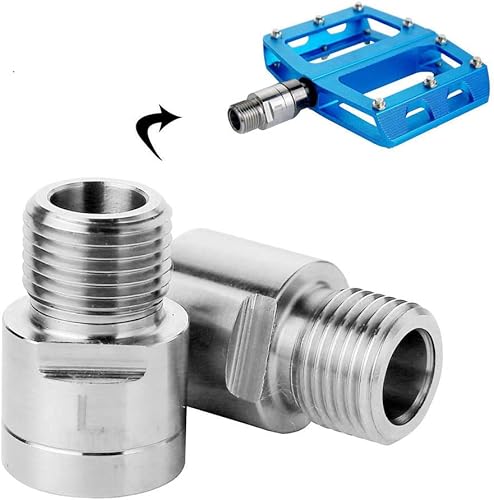
Pedal extenders, also called pedal spacers, thread between the crank arm and the pedal to move your feet further outward, usually by 16 to 20 mm per side. They solve real fit problems: riders whose heels brush the crank arms or chainstays, riders with wide hips or knee alignment issues who need a wider stance and riders recovering from knee injuries who feel better with a little more space between their feet.
To find the best bike pedal extenders, we use a clear checklist covering material, length, thread compatibility, strength and fit. This guide explains each criterion, shares three picks that pass, offers a quick buyer checklist and red flags, and answers common questions about safety and installation.
The product table above lists current options and prices.
Compare Products

- TBB Score8.8
TrekBikesBlog (TBB) score is a ranking system that rates products on a scale of 1 to 10. The TrekBikesBlog score has no relationship or impact from any manufacturers or sales agent websites – it's an unbiased way to rate our products. Learn more
- BrandN/A
- TBB Score8.2
TrekBikesBlog (TBB) score is a ranking system that rates products on a scale of 1 to 10. The TrekBikesBlog score has no relationship or impact from any manufacturers or sales agent websites – it's an unbiased way to rate our products. Learn more
- BrandN/A

- TBB Score8.8
TrekBikesBlog (TBB) score is a ranking system that rates products on a scale of 1 to 10. The TrekBikesBlog score has no relationship or impact from any manufacturers or sales agent websites – it's an unbiased way to rate our products. Learn more
- BrandN/A

- TBB Score8.8
TrekBikesBlog (TBB) score is a ranking system that rates products on a scale of 1 to 10. The TrekBikesBlog score has no relationship or impact from any manufacturers or sales agent websites – it's an unbiased way to rate our products. Learn more
- BrandN/A

- TBB Score9.2
TrekBikesBlog (TBB) score is a ranking system that rates products on a scale of 1 to 10. The TrekBikesBlog score has no relationship or impact from any manufacturers or sales agent websites – it's an unbiased way to rate our products. Learn more
- BrandN/A

- TBB Score7.2
TrekBikesBlog (TBB) score is a ranking system that rates products on a scale of 1 to 10. The TrekBikesBlog score has no relationship or impact from any manufacturers or sales agent websites – it's an unbiased way to rate our products. Learn more
- BrandN/A

- TBB Score8.4
TrekBikesBlog (TBB) score is a ranking system that rates products on a scale of 1 to 10. The TrekBikesBlog score has no relationship or impact from any manufacturers or sales agent websites – it's an unbiased way to rate our products. Learn more
- BrandN/A

- TBB Score8.8
TrekBikesBlog (TBB) score is a ranking system that rates products on a scale of 1 to 10. The TrekBikesBlog score has no relationship or impact from any manufacturers or sales agent websites – it's an unbiased way to rate our products. Learn more
- BrandN/A

- TBB Score10.0
TrekBikesBlog (TBB) score is a ranking system that rates products on a scale of 1 to 10. The TrekBikesBlog score has no relationship or impact from any manufacturers or sales agent websites – it's an unbiased way to rate our products. Learn more
- BrandN/A

- TBB Score9.8
TrekBikesBlog (TBB) score is a ranking system that rates products on a scale of 1 to 10. The TrekBikesBlog score has no relationship or impact from any manufacturers or sales agent websites – it's an unbiased way to rate our products. Learn more
- BrandN/A

- TBB Score8.0
TrekBikesBlog (TBB) score is a ranking system that rates products on a scale of 1 to 10. The TrekBikesBlog score has no relationship or impact from any manufacturers or sales agent websites – it's an unbiased way to rate our products. Learn more
- BrandN/A
Last update on 2026-11-11 / Affiliate links / Images, Product Titles, and Product Highlights from Amazon Product Advertising API
We judge pedal extenders on five criteria.
Material and Strength
Pedal extenders take high bending loads with every pedal stroke, so material quality matters more than with most small parts. Titanium alloy is light, strong and corrosion resistant, while chromoly steel is strong and affordable but heavier. Avoid soft aluminum extenders for anything but light use, since they can bend or crack.
Length
Most extenders add 16 to 20 mm per side, which noticeably widens stance without making the pedals feel strange. Longer extenders, around 27 mm or more, exist but increase leverage on threads and are best reserved for specific fit needs. Start with the smallest length that solves your problem.
Thread Compatibility
Adult bikes almost all use 9/16 inch pedal threads, while some kids' bikes, BMX and cruiser bikes with one piece cranks use 1/2 inch threads. Right side pedals use standard threads and left side pedals use reverse threads, so extenders come as a matched left and right pair.
Thread Quality and Washers
Clean, precisely machined threads screw in smoothly and hold tight. Included washers protect carbon and alloy crank arms from scoring and spread the clamping load.
Fit With Your Bike
Wider pedals can strike the ground more easily in corners, especially on mountain bikes, and may change how your shoes line up with clipless cleats. Check clearance after installing.
These three meet our criteria at different budgets.
Best Overall
The titanium alloy bike pedal extenders, around $36, add 16 or 20 mm per side with hollow titanium spacers and include washers. Titanium keeps weight low and resists corrosion, making them a long lasting choice for road, mountain and e bikes with 9/16 inch threads. The limitation is a higher price than steel.
Best Value
The chromoly steel bike pedal extenders, around $13, fit any 9/16 inch pedal and offer a strong, affordable way to widen your stance. The limitation is slightly more weight than titanium.
Best Lightweight Alternative
The Thinvik titanium alloy pedal extenders, around $34, are another light titanium option for 9/16 inch pedals, suited to riders who want a matched pair with a clean finish. The limitation is limited length choices.
For most riders, titanium is the better long term choice and steel is the better value. Titanium extenders weigh roughly half as much as steel versions, will not rust after wet rides and keep their threads clean for years, which matters on e bikes and mountain bikes that see mud and pressure washing. Chromoly steel is just as strong in this short length and costs about a third as much, so it suits commuters, hybrid riders and anyone trying out whether a wider stance helps before spending more. The weight difference is only a few dozen grams per pair, so comfort and fit should decide, not grams.
- Do they match your pedal thread size, usually 9/16 inch?
- Are they titanium or chromoly steel rather than soft alloy?
- Is the length 16 to 20 mm unless you need more?
- Do they come as a left and right threaded pair?
- Are washers included for your crank arms?
- Will your pedals still clear the ground in corners?
- No material listed or soft aluminum construction.
- Single extenders sold without a reverse thread partner.
- Rough or poorly cut threads.
- Very long extenders sold as one size fits all.
- Remove the pedals with a pedal wrench, remembering the left pedal unthreads clockwise.
- Grease the extender threads and the crank threads lightly.
- Thread the right extender into the right crank by hand, then tighten with a wrench; repeat on the left with the reverse thread extender.
- Grease the pedal threads and install the pedals into the extenders, tightening firmly.
- Check that cranks spin freely and pedals clear the frame and ground, then recheck tightness after the first ride.
Some riders find that a slightly wider stance reduces knee strain, especially if their knees naturally track outward or they have wider hips. However, knee pain can come from many fit issues, including saddle height, cleat position and crank length. If you have ongoing pain, a professional bike fit or advice from a physical therapist is the best first step, and extenders can be one part of the solution they recommend.
- Check tightness every few weeks, since loose extenders can damage crank threads.
- Re grease threads when removing pedals.
- Inspect for cracks after crashes or pedal strikes.
These are the questions riders ask most.
Are pedal extenders safe?
Yes, quality titanium or chromoly extenders installed correctly are safe for normal riding. Check tightness regularly and avoid very long, cheap extenders that add leverage on the crank threads.
What size pedal extenders do I need?
Most riders need extenders with 9/16 inch threads and a length of 16 to 20 mm. One piece cranks on some kids', BMX and cruiser bikes use 1/2 inch threads.
Do pedal extenders work with clipless pedals?
Yes, they work with flat and clipless pedals. You may need to adjust cleat position after installing so your feet sit comfortably over the pedal axle.
Will pedal extenders affect pedal strikes?
Wider pedals sit closer to the ground in corners, so you may strike rocks or the ground more often on technical trails. Keep the outside pedal down when cornering hard.
The three things that matter most are strong material, the correct thread size and the shortest length that solves your fit issue. Riders who want light, long lasting extenders should choose titanium, budget riders will be well served by chromoly steel and anyone with persistent knee pain should combine extenders with a professional fit. Use this guide to choose the best bike pedal extenders, then check the product table above for current prices. Upgrade your platform with the best mountain bike pedals.


Best Pannier Bags for Commuting, Touring, and Everyday Hauling

Best Tents for Bikepacking: Which One Fits the Way You Use It?

The Best Touring Bike Tires: Buying Guide and Top Picks

Best Mountain Bike Shin Guards: Everything to Know Before Your First Purchase
Best Bicycle Speakers at Every Price: What Your Money Really Gets You

Best Mountain Bike Goggles in 2026: Which Type Is Right for You?

Best Mountain Bike Tire Sealant: A First Time Buyer's Guide for 2026

Best Cycling Base Layers: A Buyer's Guide










