
Best Action Camera for Fishing (2026): Waterproofing, Mounts and Battery
Riding to the water changes what a camera has to survive. It gets bounced in a handlebar bag or jersey pocket on gravel, then it has to shrug off spray, wet hands and a fish that only stays boatside for a few seconds. Choosing the best action camera for fishing is less about the biggest resolution number and more about waterproofing you can trust, mounts that stay put and controls that work when your hands are cold and dripping.
This guide is written for anglers who pedal to bank spots, launches and docks. It sorts cameras by how you fish, then compares the features that matter on the water. If you film plenty of other sports too, our broader guide to the best action camera covers the general field, and the comparison table below lines up the key specs side by side.
Compare Products

REMALI CaptureCam 4K60FPS Waterproof Action Camera 21-Piece Complete Kit and
- TBB Score8.8
TrekBikesBlog (TBB) score is a ranking system that rates products on a scale of 1 to 10. The TrekBikesBlog score has no relationship or impact from any manufacturers or sales agent websites – it's an unbiased way to rate our products. Learn more
- BrandREMALI
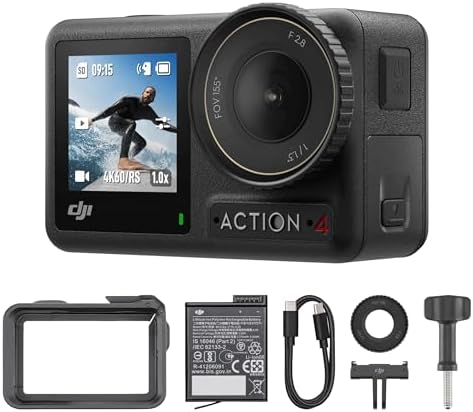
DJI Osmo Action 4 Essential Combo, Waterproof Action Camera Vlogging
- TBB Score9.4
TrekBikesBlog (TBB) score is a ranking system that rates products on a scale of 1 to 10. The TrekBikesBlog score has no relationship or impact from any manufacturers or sales agent websites – it's an unbiased way to rate our products. Learn more
- BrandDJI

DJI Osmo Action 5 Pro Essential Combo, Waterproof Action Camera
- TBB Score9.2
TrekBikesBlog (TBB) score is a ranking system that rates products on a scale of 1 to 10. The TrekBikesBlog score has no relationship or impact from any manufacturers or sales agent websites – it's an unbiased way to rate our products. Learn more
- BrandDJI

GoPro HERO12 Black - Waterproof Action Camera with 5.3K60 Ultra
- TBB Score9.0
TrekBikesBlog (TBB) score is a ranking system that rates products on a scale of 1 to 10. The TrekBikesBlog score has no relationship or impact from any manufacturers or sales agent websites – it's an unbiased way to rate our products. Learn more
- BrandGoPro

AKASO EK7000 Pro 4K30fps Action Camera with Touch Screen EIS
- TBB Score9.0
TrekBikesBlog (TBB) score is a ranking system that rates products on a scale of 1 to 10. The TrekBikesBlog score has no relationship or impact from any manufacturers or sales agent websites – it's an unbiased way to rate our products. Learn more
- BrandAKASO

AKASO Brave 4 Action Camera 4K 30fps Ultra Hd Video
- TBB Score8.8
TrekBikesBlog (TBB) score is a ranking system that rates products on a scale of 1 to 10. The TrekBikesBlog score has no relationship or impact from any manufacturers or sales agent websites – it's an unbiased way to rate our products. Learn more
- BrandAKASO

Icefox 4K 30FPS Action Camera, 20MP, 5X Zoom, 2 Batteries
- TBB Score8.4
TrekBikesBlog (TBB) score is a ranking system that rates products on a scale of 1 to 10. The TrekBikesBlog score has no relationship or impact from any manufacturers or sales agent websites – it's an unbiased way to rate our products. Learn more
- Brandicefox

Apexcam M80 AIR 4K 60FPS 64MP EIS WiFi Action Camera
- TBB Score8.2
TrekBikesBlog (TBB) score is a ranking system that rates products on a scale of 1 to 10. The TrekBikesBlog score has no relationship or impact from any manufacturers or sales agent websites – it's an unbiased way to rate our products. Learn more
- BrandApexcam

Dragon Touch 4K Action Camera - Vision 3 Underwater Waterproof
- TBB Score8.4
TrekBikesBlog (TBB) score is a ranking system that rates products on a scale of 1 to 10. The TrekBikesBlog score has no relationship or impact from any manufacturers or sales agent websites – it's an unbiased way to rate our products. Learn more
- BrandDragon Touch
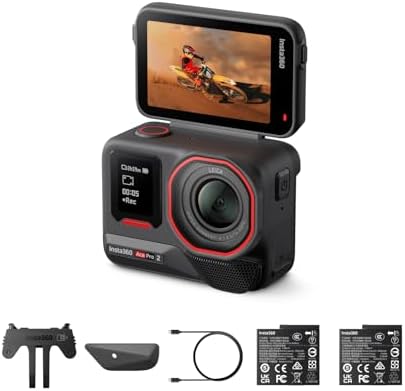
Insta360 Ace Pro 2 Dual Battery Bundle, 8K AI-powered Action
- TBB Score9.0
TrekBikesBlog (TBB) score is a ranking system that rates products on a scale of 1 to 10. The TrekBikesBlog score has no relationship or impact from any manufacturers or sales agent websites – it's an unbiased way to rate our products. Learn more
- BrandInsta360
Last update on 2026-11-14 / Affiliate links / Images, Product Titles, and Product Highlights from Amazon Product Advertising API
Riders Who Bike to Bank and Dock Spots
You ride a few miles with everything on your back or in a frame bag, then fish from shore. Your camera needs to be small enough to forget on the ride, quick to start with one button press and happy on a chest mount so both hands stay free for the rod. Battery swaps matter more than exotic modes, because a missed hook set cannot be filmed twice.
Kayak and Small Boat Anglers
On a kayak your camera lives close to the waterline, so it needs real waterproofing without a bulky housing and a mount that clamps to a rail or sits on a short pole behind the seat. A floating hand grip and a simple tether are worth more than a second screen. Look for a lens cover you can replace after it takes a knock against a paddle or a cooler.
Dawn Patrol and Low Light Regulars
The best fishing often happens in the first and last hour of light, exactly when small sensors struggle. If most of your footage is shot at sunrise, in shade or under tree cover, sensor size and image quality in dim light should outrank frame rate tricks. A camera that holds detail at dawn will serve you better than one that only shines at noon.
Waterproofing Without a Housing
Most current action cameras seal to about 10 m straight out of the box, which covers rain, spray and a quick dunk when a fish pulls the mount under. Check that the battery door has a proper lock and a rubber seal you can inspect, because one grain of sand in that seal is all a leak needs. A housing adds depth for diving, but for fishing it mostly adds bulk and muffled sound, so buy a camera that is waterproof on its own.
Mounts That Survive the Ride and the Cast
A chest harness gives the most natural view of a cast and a landing, and it keeps the camera secure while you pedal. Hat and cap clips are lighter but shake more, and any mount on the rod itself vibrates too much to watch. Use the standard two prong folding mount or a magnetic quick release so the camera moves from the handlebar to your chest in seconds. If your other filming happens at road speed, our guide to the best action camera for motorcycle covers mounts built for stronger wind and vibration.
Battery Life and Swappable Packs
Expect roughly 60 to 120 minutes of recording from one battery depending on resolution, frame rate and temperature, and cold dawn air shortens that further. A camera with a removable battery you can swap in ten seconds beats a sealed unit with a longer rating, because two spare packs in a tackle bag end the range problem completely. Carry batteries in a dry case, and warm a cold spare in an inside pocket before you swap it in.
Resolution and Frame Rate for the Strike
4K at 60 frames per second is the practical sweet spot for fishing: sharp enough to crop a little, smooth enough for a jumping fish. Higher frame rates such as 120 or 240 frames per second let you slow a hook set or a surface strike right down, at the cost of battery and card space. Resolution above 4K mainly buys cropping room. For most anglers, steady 4K footage with good color beats a fragile 5.3K or 8K mode you rarely dare to use.
Controls That Work With Wet Hands
Touch screens misread drips as taps, so the record button has to be big, raised and easy to find by feel. Voice control earns its keep when both hands are busy with rod and net, and a simple beep or vibration cue confirms the camera started. Check that the front screen or status light is visible in bright sun, because glare on a rear screen is the main reason anglers come home with no footage of the best fish.
Loop Recording and Pre Record Modes
Loop recording keeps only the last few minutes and overwrites the rest, so you can leave the camera running and save just the strike. Some cameras add a short pre record buffer that captures the seconds before you press the button, which rescues casts where the fish hit early. These two modes matter more to fishing than to almost any other sport, and they turn a small memory card into an all day tool.
On the ride in, a handlebar mount or a pocket is fine, but start fishing with the camera on your chest. That angle shows the rod bend, your hands and the fish in one frame. Keep a short tether between the camera and the mount or your life vest; mounts rarely fail, but when one does over water the camera is gone in a second. A 360 camera earns a place here too, since you can reframe the cast and the catch later instead of aiming while you fish, and our guide to the best 360 action camera explains the trade offs of that format.
Set the camera before the first cast, not after the first bite. Pick one resolution and frame rate, lock the horizon leveling on, and turn off any mode that needs a phone app mid session. Fishing footage is lost to fiddling far more often than to weak specs, and the best action camera for fishing is the one already rolling when the water moves.
Entry level cameras at around $100 cover the fishing basics: waterproof bodies, 4K video and a simple mount thread, with weaker low light results and shorter battery life. The middle tier, about $150 to $300, adds stronger stabilization, better screens and swappable batteries from the big brands. Flagship models at around $300 to $450 buy the largest sensors, the best dawn footage and the fastest frame rates. Our guide to the best budget action camera walks through what the entry tier gives up, and for fishing the honest answer is that the middle tier is where most riders should land.
- Leaving the battery door seal unchecked, so one grain of sand floods the camera on the first dunk.
- Filming all day at the highest frame rate, which drains batteries and fills cards before the evening bite.
- Mounting the camera on the rod, where every cast shakes the footage into a blur.
- Skipping a tether over water, so a single loose clamp costs you the camera.
- Trusting the touch screen with dripping hands instead of setting up the physical record button.
- Buying a waterproof case you do not need, which adds bulk and muffles the sound of the strike.
Rinse the camera in fresh water after any saltwater trip, with the battery door closed, then dry it fully before you open anything. Wipe the door seal and check it for grit every time you swap a battery. Store batteries at a partial charge rather than full or empty, keep them out of a hot car, and format memory cards in the camera itself so file errors do not build up. A scratched lens cover is cheap to replace; a scratched lens ends the camera, so swap covers early.
What is the best action camera for fishing?
There is no single winner, because the right choice follows your mount and your light. Bank and kayak anglers do best with a waterproof camera on a chest mount, swappable batteries and loop recording. Dawn regulars should trade frame rate for sensor size. Match the camera to those three needs first, and ignore headline resolution until the basics are covered.
How long does an action camera battery last on a fishing trip?
Plan on roughly one to two hours of actual recording per battery, less in cold weather or at high frame rates. Loop recording stretches a battery much further because the sensor idles between saved clips. Two spare packs, rotated through an inside pocket to stay warm, cover a full day for almost anyone.
How do you clean an action camera after saltwater fishing?
Keep every door shut and soak the camera in fresh water for a few minutes, then rinse it under a gentle tap and pat it dry. Salt crystals creep into seals and button shafts, so work each button a few times under the rinse. Never open the battery door while the camera is still wet, and let it air dry fully before charging.
Is an action camera worth it for catch and release fishing?
Yes, and it can be kinder to the fish. A chest camera that is already rolling lets you land, film and release in one smooth motion instead of holding the fish up while someone finds a phone. Set the camera running before the fight ends, keep the fish in the water as much as you can, and the release stays quick.
Can an action camera save a strike without recording all day?
Yes. Loop mode keeps a rolling window of the last few minutes and only saves when you press the button, and a pre record buffer adds the seconds just before the press. Together they mean the camera can watch the water for hours while your memory card only holds the moments that mattered.
Pick waterproofing, mounts and battery swaps before resolution, set the camera up before the first cast, and tether it whenever water is under you. Do that, and the best action camera for fishing for your riding and your water is easy to spot in the product table above. Tight lines, and may the camera be rolling for the big one.

Best Action Camera Under 100 Dollars (2026): Real 4K Claims and Hidden Costs

Best 3L Hydration Packs (2026): Load Support, Reservoir and Fit

Best Action Camera for Motorcycle (2026): A Rider Buying Guide
Best Action Camera (2026): Rider Buying Guide

Best Bike Pedals for Commuting in 2026: Buying Guide and What to Check

Best Bike Trainer Under 500 Dollars in 2026: A Smart Guide

Best Cirkul Water Bottles: Which Type Suits Your Riding? (2026)

Best Bike Computer Mountain Biking: Which One Fits Your Riding in 2026










